
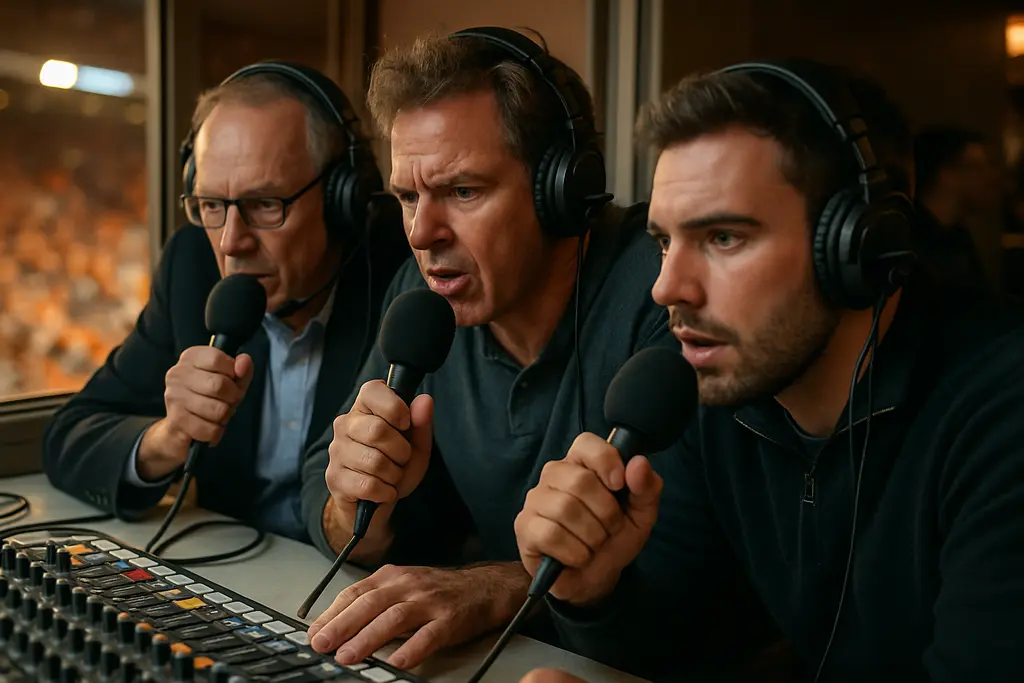

Texas State radio entered a new chapter on September 4, 2026, when Texas State Athletics and Learfield’s Texas State Sports Properties announced that Cameron Parker would join Brant Freeman as co-play-by-play announcers for the Bobcats’ 2026 football and men’s basketball seasons, according to the Texas State announcement. The move matters because it is not just a booth change. It is a signal that the school wants its audio coverage to match the larger stage surrounding the Bobcats as they compete as a full member of the newly reformed Pac-12 Conference in 2026-27.
How Texas State radio Changes The Booth
Why Texas State radio Needed Two Voices
The first thing local listeners will notice is the structure. This is not a single lead voice with a rotating guest presence. Parker and Freeman were announced as co-play-by-play announcers, giving the network two primary narrators for football and men’s basketball. On The Craig Way Show preview, the broadcast plan was described as flexible, with one announcer calling the first and fourth quarters and the other taking the second and third quarters, depending on the game, as discussed in the Texas State preview.
For Texas State radio, that shared format can help a full broadcast hold pace. College football radio asks a voice to carry scoring swings, replay reviews, injuries, substitutions, crowd noise, clock pressure and sponsor reads without losing the listener. Men’s basketball brings a different rhythm, with faster possessions and less time to reset. Splitting the call gives both announcers room to bring energy without asking one person to shoulder every high-stress sequence from opening kick to the last snap.
The setup also gives listeners two ways to hear the same team. Freeman brings continuity and memory. Parker brings a newer outside viewpoint from recent assignments tied to other high-profile college broadcasts. That combination can serve a fan base that now includes longtime San Marcos regulars, alumni following from other cities and newer Pac-12 viewers trying to learn the Bobcats quickly.
Freeman’s San Marcos Memory Bank
Freeman’s value starts with time on task. Texas State said he has been part of Bobcats broadcasts since 2003, has covered nearly every Texas State sport, and has hosted the Coaches Radio Show since 2006 and the statewide football television show from 2010 through 2019, according to the official release. That background is not just a résumé line. It gives a broadcast practical memory.
When a football possession stalls, Freeman can frame how a coaching staff has handled similar moments. When a basketball rotation tightens, he can draw from years of seeing how Bobcat teams have used bench minutes. When a player from a Texas recruiting corridor breaks through, he can connect that growth to the local sports identity around the program. Radio rewards that kind of recall because listeners cannot see the full sideline or bench. The voice has to place them there.
For the San Marcos community, Freeman also represents continuity at a time of major change. Conference affiliation has shifted. Opponents have changed. The level of outside attention has increased. Keeping a familiar voice in the booth helps the broadcast feel rooted even as the schedule and audience get bigger.
What Parker Adds To The Fan Experience
A Voice With Recent Major-Platform Reps
Parker enters the booth with recent experience that fits the moment. Texas State’s announcement noted his work for ESPN+ and Longhorn Network, where he called Texas Longhorns baseball and beach volleyball, along with radio play-by-play for Texas men’s and women’s basketball. That background matters for a Bobcats program trying to sound sharp across football and men’s basketball, two sports with very different broadcast demands.
Baseball play-by-play rewards patience, detail and anticipation. Basketball rewards quick recognition and precise spacing language. Football asks for field position, personnel groupings, down-and-distance and situational awareness. Parker’s recent work across several sports gives Texas State a voice used to changing pace and explaining action cleanly for listeners who may be joining from a car, a tailgate, a workplace or an out-of-market stream.
His presence can also help introduce the Bobcats to new audiences without talking past the core supporters. A newer listener may need reminders on personnel, league context and coaching tendencies. A longtime fan wants the call to respect what the program has been building. Parker’s job is to make the broadcast accessible without flattening the local details that give Bobcat athletics its identity.
Balancing Loyal Bobcats And First-Time Listeners
The best local broadcasts do two things at once. They make the diehard feel seen, and they help the newcomer understand why the moment matters. That balance is especially valuable for Texas State in 2026. The school’s Pac-12 move gives football and men’s basketball a wider frame, but the program’s heartbeat still runs through San Marcos, campus routines, alumni weekends, student sections and family trips to games.
That is where Parker and Freeman can work as a useful pairing. Freeman can supply the institutional thread. Parker can ask the kind of framing questions that a newer audience may bring. The broadcast should not have to choose between memory and clarity. If the partnership finds its rhythm, listeners get both.
This also fits the broader fan culture around the Bobcats. Local audio, coaches shows, game-week conversations and community gatherings all help keep interest moving between games. That same connection shows up in local fan touchpoints such as Eat ‘Em Up Radio, where Bobcat talk extends beyond the stadium and into the weekly sports routine around San Marcos.
Why The Timing Matters For The Pac-12 Move
Conference Change Raises The Standard
Texas State’s broadcast announcement came as the Bobcats began their first season as a full member of the newly reformed Pac-12 Conference in 2026-27, a fact included in the school’s release. That timing gives the booth change extra weight. Fans are not simply asking who is calling the game. They are asking whether the entire presentation feels ready for a larger stage.
Texas State radio is now asked to do more than describe snaps and shots. It has to explain unfamiliar opponents, place road environments in context and help listeners track how the Bobcats fit into a new league. That kind of work takes preparation and chemistry. A road football game in a new conference setting may require more background on opponent style, travel rhythm and matchup history than fans needed in a familiar league. Basketball will bring its own adjustment, with conference opponents that may carry different roster profiles and game tempos.
The co-play-by-play format gives the network a way to share that preparation. One voice can frame the opening stretch. The other can carry the middle of the game and return the broadcast to key themes. In close games, the switch back for late action can give the fourth quarter or closing minutes a clear lift.
Radio Still Belongs To The Local Fan
Television gets much of the attention during conference moves, but radio remains personal. It follows fans through traffic on I-35, into garages on Saturday afternoons, across phones during family events and through earbuds for alumni far from Hays County. A strong local call can turn a road game into a shared San Marcos experience, especially when the broadcast keeps the listener aware of the sideline mood, crowd tone and game situation.
Learfield’s Texas State Sports Properties sits at the center of that connection as the school’s multimedia rights partner. The September 4 announcement tied the new booth to a wider fan experience that includes live broadcasts, storytelling content, digital platforms, NIL efforts, merchandise and brand engagement. The key for listeners will be whether all of that still sounds like Texas State rather than a generic college broadcast. Freeman and Parker give the network a chance to keep the call specific: names pronounced with care, local context included, and momentum described through a Bobcat lens.
Why Texas State radio Matters In San Marcos
The Parker-Freeman pairing should be judged by how well it serves the people who build their weeks around Bobcat sports. That includes students walking over from campus, parents tracking a player’s first meaningful snaps, alumni checking scores between family plans and local businesses that feel the traffic and energy around game days.
If Texas State radio gets this right, the booth can become one of the steady links between a changing athletic department and a loyal local audience. Freeman keeps the past close. Parker helps present the program to those just arriving. Together, they can give the Bobcats a broadcast sound that fits the size of the Pac-12 move while staying grounded in San Marcos.
The change does not guarantee better games, better execution or larger crowds by itself. The players and coaches still decide the story on the field and court. But a clear, informed and energetic call can make those stories easier to follow, easier to remember and easier to share. For Texas State fans in 2026, that is the real value of the new booth.