
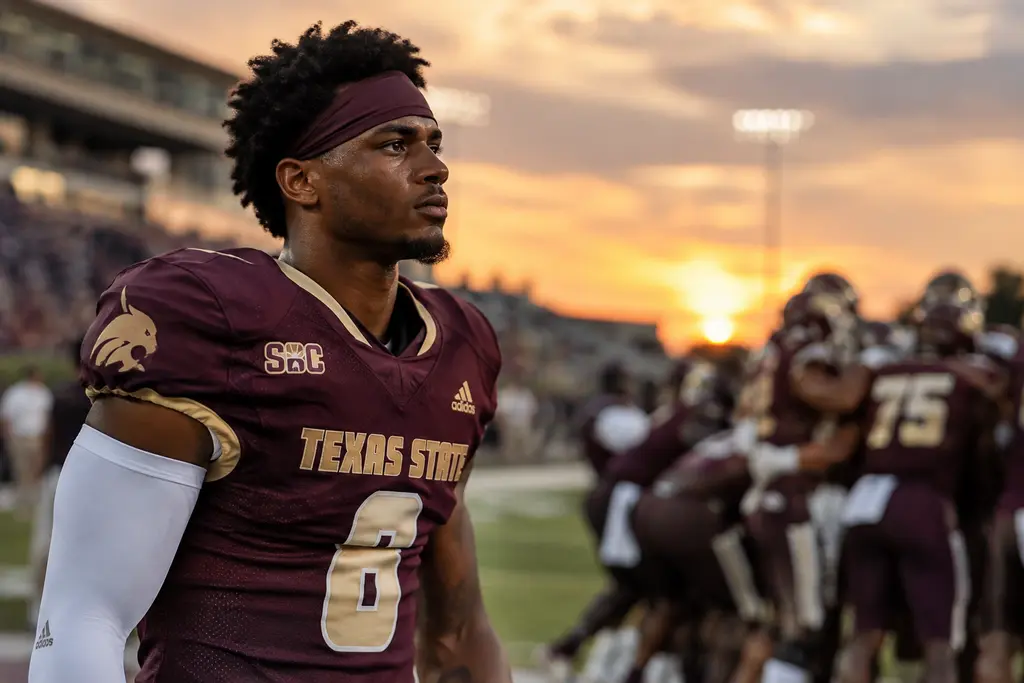
As of November 5, 2026, the Texas State depth chart has moved from preseason projection to weekly proof. The Bobcats are no longer being judged only on how they might fit into Pac-12 play; they are being measured by how their starters, young reserves and transfer pieces handle the strain of conference snaps. For San Marcos, that makes the roster story feel personal. This is not just a chart of names. It is the week-to-week identity of a local program trying to carry its recent rise into a tougher football setting.
Texas State depth chart Starts With Jackson
Texas State’s clearest answer sits at quarterback, where redshirt sophomore Brad Jackson has given the offense a steady point of reference. Through eight games, Jackson has completed 156 of 232 passes for 1,933 yards, 18 touchdowns and five interceptions, while also rushing 85 times for 436 yards and six scores, according to his Ourlads player page. That combination matters because it gives the Bobcats a quarterback who can win from the pocket, extend drives with his legs and keep the call sheet wider for the staff.
Why Texas State depth chart Stability Matters At QB
That quarterback stability shapes everything around Texas State. A roster with a heavy newcomer presence needs one position group to settle the rest of the offense, and Jackson has done that better than any other player on the unit. His completion rate points to efficiency, but his rushing work changes the math for defenses. Opponents have to account for designed runs, broken-play scrambles and red-zone carries, which can help the line and backs by slowing backside pursuit.
That is why the Texas State depth chart reads differently at quarterback than it does at several other positions. The Bobcats have a defined starter rather than a weekly competition, and that allows the staff to build offensive rhythm around one player’s strengths. In a first Pac-12 campaign, that kind of clarity has value. It reduces uncertainty for receivers, backs and linemen during a stretch when every conference week brings a new scouting challenge.
QB2 And QB3 Remain Development Roles
The next layer is less proven. Public depth data lists Gavin Parkhurst and Shaker Reisig behind Jackson on the Texas State depth chart, and the research snapshot shows their game work has been limited compared with Jackson’s. That does not mean the room lacks talent. It means the safety net behind the starter has not been tested the same way in Pac-12 pressure spots.
For a local fan base that has seen how quickly a season can shift, the backup quarterback picture is worth watching without turning it into alarm. The staff’s challenge is player development: giving younger quarterbacks enough practice and situational work to stay ready while not disrupting the offense Jackson has earned the right to lead.
Offensive Skill Spots Carry Local Familiarity
The most encouraging part of the offensive structure is that Jackson is not carrying the passing game by himself. The receiver group is led by experienced upperclassmen Chris Dawn Jr. and Beau Sparks, two names that have become familiar around San Marcos football conversations. Their value is not only in targets or catches. It is in route trust, spacing and communication with a quarterback who plays fast when the picture is clear.
Receivers Give Jackson A Trusted Base
When a quarterback has veteran receivers, third down becomes less of a guessing game. Dawn and Sparks give Texas State credible answers outside and in the intermediate areas, while younger receivers such as Zechariah Sample and Kylen Evans have been identified in the research snapshot as players gaining meaningful involvement. That blend is important because Pac-12 defenses can force offenses to win beyond the first read.
The local angle here is player growth. A program in transition cannot rely only on one wave of veterans. It needs the next group learning while the older group still sets the standard. That was part of the conversation in our earlier look at roster pressure after Week 1, and it remains true deep into the schedule. Texas State needs young pass catchers to keep gaining trust before injuries, fatigue or matchup pressure make depth a necessity rather than a preference.
Running Back Rotation Still Has Questions
At running back, the research points to Torrance Burgess Jr. as the lead piece, with Davian Jackson among the younger or newer contributors in the mix. The key question is not whether Texas State has options. It is whether the rotation can produce consistent early-down success against stronger defensive fronts. Jackson’s rushing ability helps, but the Bobcats still need backfield carries that keep the offense on schedule without asking the quarterback to absorb every physical answer.
That is where the offensive line enters the story. The research identifies veterans such as Sully Burns and William Boone at tackle, with Rasheed Jackson and Bamidele Badusi carrying major guard work. Without adding unsupported grading claims, the practical read is simple: if Texas State can protect Jackson and create enough run-game balance, the offense has the pieces to stay dangerous. If the line gets stressed by Pac-12 size and pressure, the skill talent has less room to show.
Defense Has Tackling Answers, But Needs More Disruption
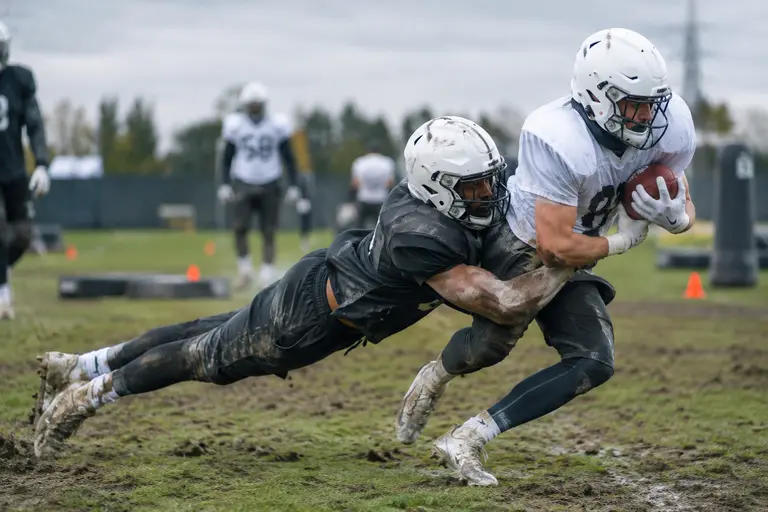
The defensive side has produced clear tackle leaders, starting with safety Jayden Bradley. SharpData OS credits Bradley with 56 total tackles, 2.0 tackles for loss and one interception through eight games, while Terrence Cooks II and Ayden Jones have also been listed among the team’s leading tacklers in the same defensive snapshot from team depth data. Those numbers give Texas State a defensive backbone, especially through the middle and back end.
Linebacker And Safety Production Stands Out
Bradley’s tackle volume says two things at once. First, he is active and dependable near the ball. Second, the defense has had enough plays reach the second and third levels for a safety to pile up that kind of work. That is not a criticism by itself, but it frames the next step. Texas State needs tackles, yet it also needs more disruption before plays develop.
Linebackers such as Cooks and Jones give the Bobcats a base of physical response. In conference play, though, tackles after moderate gains are not always enough. The defense’s ceiling depends on negative plays, hurried throws and tighter coverage windows. The research snapshot describes pass-rush and disruption production as moderate, which fits the concern: the Bobcats have players making stops, but the next jump comes from changing drives earlier.
Coverage Depth Faces Pac-12 Spacing
The secondary has encouraging pieces. The research identifies Trez Moore at corner with notable pass-breakup production and Ryan Nolan at safety with ball production of his own. That matters against offenses that stretch the field horizontally and force defensive backs to tackle in space. Still, coverage is not only about the starters. It is about whether the third corner, second safety pairing and reserve defensive backs can hold up when opponents increase tempo or attack matchups.
For Texas State, the defensive test is tied to community pride as much as stat sheets. San Marcos has watched this program push into a larger football conversation. The next sign of growth will be a defense that does not simply survive possessions, but gives the offense shorter fields and the crowd more sudden-change moments at home.
What Texas State depth chart Means For San Marcos
The Texas State depth chart tells a grounded story: quarterback is a strength, the receiver room has experience, the running back rotation is still defining its ceiling, and the defense has tackle production while seeking more disruption. That is a fair midseason read, not a panic point and not empty praise.
For the San Marcos sports community, this roster matters because it shows what the Bobcats are building in real time. Transfer additions and young players have raised the talent level, but cohesion still has to be earned through practice weeks, road trips and conference snaps. The staff’s job is to keep Jackson protected, keep skill players involved, and keep developing the second wave before the schedule demands it.
The Bobcats have enough proven production to compete in their new setting, but the margin is thinner in Pac-12 play. The final month of the 2026 regular season will likely reveal whether Texas State’s depth is ready to support its top-end talent. In a city that has leaned into the program’s rise, that makes every position battle feel connected to something larger than a two-deep sheet. It is about whether Texas State can turn roster promise into a sustainable football standard.