


The Texas State Depth Chart tells a clear story after the Bobcats reached September 2026: G.J. Kinne’s roster has a proven quarterback, returning production at wide receiver, new pressure in the trenches and enough transfer movement to make every second-team spot matter. With Texas State having officially moved into the Pac-12 on July 1, 2026, the depth chart is not just a camp document. It is a working map for how the Bobcats plan to handle a larger weekly challenge while keeping San Marcos at the center of their football identity.
Texas State Depth Chart Priorities After Week One
Why The Texas State Depth Chart Starts With Brad Jackson
The quarterback position gives Texas State the cleanest starting point on offense. Brad Jackson returned as the clear starter after a 2025 season that placed him among the most productive dual-threat quarterbacks in the program’s recent run. He appeared in 13 games, completed 251 of 352 passes for 3,224 yards, threw 21 touchdowns against seven interceptions, and rushed for 744 yards with 17 rushing touchdowns, according to Sports Reference’s Brad Jackson profile.
Those numbers matter because the Pac-12 move raises the value of stable quarterback play. Texas State does not have to use September to identify its offensive leader. Jackson’s return gives the staff room to test protection combinations, receiver rotations and running back usage without adding a quarterback uncertainty to the weekly plan.
The backup competition still carries real roster value. Research notes Shaker Reisig, a Boston College transfer, as the expected primary backup, with true freshman Easton Webb and reserves Gavin Parkhurst and Stone Walker also part of the room. That competition is not simply about emergency depth. A longer conference travel schedule and the physical toll of a full season make practice reps behind Jackson meaningful, especially for younger quarterbacks who could shape future seasons in San Marcos.
Receiver Continuity Changes The Offensive Floor
Texas State’s passing game also benefits from returning wide receiver strength. Beau Sparks and Chris Dawn Jr. give Jackson two established targets rather than a rebuilt receiver room. Sparks led the Bobcats in 2025 with 84 receptions, 1,200 receiving yards and 10 touchdowns, averaging 14.3 yards per catch, and Texas State noted that he had seven 100-yard receiving games in its preseason All-Texas selections announcement.
Dawn posted his first 1,000-yard season with Texas State, according to the research provided, and is expected to remain a top option at the WR-Z position. That pairing gives the offense matchup flexibility. Sparks can stress coverage with proven production, while Dawn’s return keeps defenses from shading all attention toward one side of the formation.
That is why the Texas State Depth Chart feels different from a standard early-season projection. The top of the passing game is not built on hope. It is built on players who already carried volume in 2025 and chose to remain part of the Bobcats’ first Pac-12 season.
Backfield And Offensive Line Battles Shape The Rotation
Running Back Depth Has Names But No Settled Workload
The running back room is deeper than it is settled. Research from the September 5, 2026 depth chart lists Torrance Burgess Jr. first string and Jaylen Jenkins second, with Taji Atkins and portal newcomer Davian Jackson also in the rotation. That gives Texas State options, but it does not yet identify one clear workhorse based on the available notes.
That distinction matters for game planning. With Brad Jackson already a major rushing factor, the staff can spread touches across backs instead of forcing one player into every short-yardage, pass-protection and perimeter role. Burgess and Jenkins give the room senior presence, while Atkins and Davian Jackson represent the type of depth that can keep a rotation fresh through heavier travel and conference play.
Jenkins also has special teams value in the return game, according to the research. That two-phase role can affect snap management. If Jenkins is part of the return structure, the offensive staff has to balance his backfield workload with field-position assignments.
Transfer Linemen Raise The Competition Level
The offensive line carries one of the most important roster stories. Research notes that Texas State added Power Four offensive line transfers, including William Boone from North Carolina and Rasheed Jackson from TCU. Boone, listed in the research at 6-foot-6 and 340 pounds, is expected to compete for a starting tackle role. Returner Bamidele Badusi gives the group an experienced internal option.
Line play will decide how much of the offense can travel into Pac-12 competition. Jackson’s passing efficiency in 2025 gives Texas State a high starting point, but protection consistency is what allows route concepts to develop and keeps the quarterback from having to create outside structure on too many downs. The Bobcats’ staff used the transfer portal to add size and competition, and those additions now have to become a functional rotation.
The offensive line picture also connects with the broader roster-building pattern. Texas State brought in nearly 20 transfers for 2026, including eight from Power Four schools, according to the research. That level of movement creates immediate practice pressure. It also fits the program’s wider push to build playable depth, a theme we examined in our piece on how Texas State recruiting added portal depth before the 2026 season.
Defensive Depth Has To Answer The Run Game
New Coordinator, New Front-Line Options
The defensive side brings a more unsettled but equally important set of roster dynamics. Will Windham was hired as defensive coordinator before the 2026 season, according to the research, after previously working at South Alabama. His arrival pairs with a defensive line infusion that includes Kaleb James from Arkansas and Tae Woody from ULM, with prior stops at Florida State and UAB noted in the research.
The reason for that emphasis is direct: Texas State needed to improve against the run after ranking 91st nationally in rushing yards allowed per game in 2025, according to the research notes. Without inventing a finished answer, it is fair to say the staff targeted the defensive front as a roster priority. The names added up front suggest Texas State wanted more size, experience and competition near the line of scrimmage.
The Texas State Depth Chart will be judged on whether those additions can become dependable snaps, not just new names. Defensive line depth often shows itself late in drives, after tempo series and during the middle quarters when fatigue begins to test gap discipline. For a team changing conferences, the ability to rotate without a major drop-off could become one of the most valuable parts of the roster.
Ryan Nolan Gives The Secondary A Veteran Base
Safety Ryan Nolan gives the defense a returning leader behind the front. Texas State’s official announcement credited Nolan with 79 tackles, second on the team, and 3.0 tackles for loss in 2025. That experience matters for communication, especially when a new coordinator is installing calls and responsibilities across the defense.
Veteran safety play can help settle cornerback competition as well. The research notes that cornerback is one of the roster spots facing pressure after the transfer additions. A safety with proven tackling production can cover assignment issues before they become explosive plays, but the Bobcats still need the corner rotation to hold up in coverage so Nolan is not forced into constant cleanup work.
- Most stable offensive spot: starting quarterback, with Jackson returning after major 2025 production.
- Most proven skill group: wide receiver, led by Sparks and Dawn.
- Most important offensive battle: tackle and interior line roles after transfer additions.
- Most urgent defensive question: whether new defensive linemen help reduce rushing damage.
- Most valuable leadership piece: Nolan’s experience at safety.
Special Teams And Bottom-Roster Roles Matter In San Marcos
Return Jobs Add Value To Skill Players
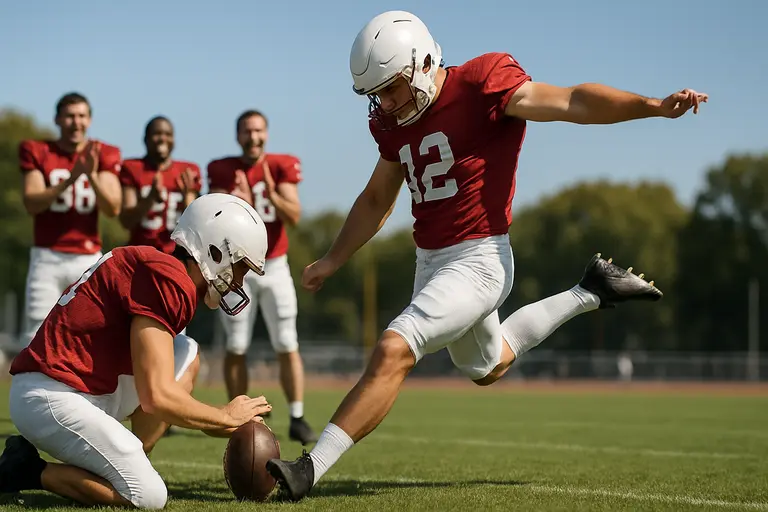
Special teams should not be treated as a side note on this roster. Michael James returns at kicker, while the research identifies Tom Flintoff as a freshman punter and Dylan Cunanan as a portal addition at kicker. That creates competition and depth at specialist spots that can influence field position during tight games.
The return structure also affects offensive usage. Jenkins and Sparks are both involved in return duties, according to the research. For Sparks, that creates a question of workload because he is already one of the offense’s leading receivers. For Jenkins, it adds another path to impact beyond running back snaps.
Those decisions often reveal how a staff views its roster. If a top offensive player remains in the return plan, the staff is choosing field-position value over rest. If a reserve earns that job, it can open a game-day role for a player who is not getting steady offensive or defensive snaps.
Transfer Volume Raises Practice Standards
The transfer count is one of the defining pieces of the 2026 roster. Nearly 20 incoming transfers, including eight from Power Four schools, means the second and third strings carry more weekly pressure than a typical returning group. That can be healthy if competition sharpens practice. It can be challenging if roles remain unclear for too long.
The Texas State Depth Chart reflects a program trying to raise its floor while protecting the continuity that made the 2025 offense dangerous. The local impact is real. San Marcos supporters have watched the Bobcats grow from bowl success into a Pac-12 member, and roster depth is now part of that identity. It is not enough to have standout starters. The Bobcats need enough playable bodies to handle injuries, travel, special teams snaps and matchup-specific plans.
What This Texas State Depth Chart Means For San Marcos
The Texas State Depth Chart matters because it shows how the Bobcats are trying to carry recent momentum into a larger conference setting without losing the local edge that has fueled interest around the program. Jackson gives the offense a proven leader. Sparks and Dawn give the passing game credibility. The running back room has competition, the offensive line has transfer-driven pressure, and the defensive front has new personnel tied to a clear need against the run.
For San Marcos, this is the roster phase where ambition has to become weekly reliability. The names at the top of the chart draw attention, but the second-team tackle, third receiver, rotational defensive lineman, backup quarterback and return specialist may decide how well Texas State handles the demands of 2026. That is where a depth chart becomes more than a list. It becomes the clearest picture of how ready the Bobcats are for the football they have worked to reach.