
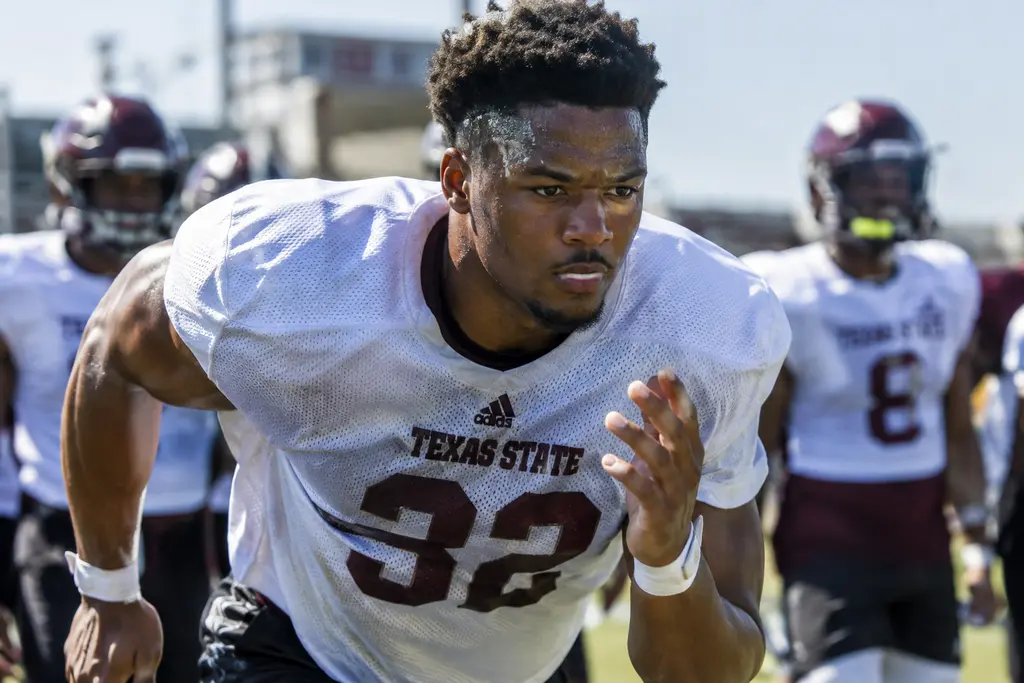

Texas State Transfers became one of the clearest storylines in the Bobcats’ 2026 roster build, not as a side piece to recruiting but as a central part of how GJ Kinne’s program filled experience needs across key position groups. On3’s 2026 Texas State roster listed 95 players, with 30 identified as transfers, meaning nearly one-third of the roster arrived through the portal 2026 Texas State roster. For a San Marcos program trying to keep momentum while raising its week-to-week standard, that number says plenty about how the staff balanced high school development with immediate roster help.
How Texas State Transfers Rebuilt Depth
The portal did not replace traditional recruiting for Texas State. It worked beside it. The difference is timing. High school signees often need strength work, playbook time and special teams reps before they are ready for major snaps. Transfers can arrive with college practice habits, game preparation experience and a clearer sense of what their bodies need across a long season.
Texas State Transfers And The Roster Math
The 30-transfer figure matters because it shows that this was not a small adjustment. It was a roster-building plan. A 95-player group with 30 transfers leaves Texas State with a blend of returning Bobcats, new high school talent and players who already spent time inside other college programs. That blend can help a staff handle attrition, injuries and position battles without asking every freshman to contribute before he is ready.
It also reflects the reality of modern roster management in San Marcos. Texas State has had to recruit its own roster while also recruiting outside help. That means the staff must identify where returning players fit, where young players need time, and where an older newcomer can raise the floor of a room right away. The better that process works, the more competitive practices become.
Why Experience Was The Priority
Yahoo Sports reported that Texas State used the portal to add depth at key positions, including quarterback, offensive line, defensive line, edge and cornerback Yahoo Sports portal report. That type of spread across the roster shows a staff aiming to protect itself in the areas where college football seasons are often decided: quarterback availability, line play, pass rush and coverage depth.
The local angle is clear for Bobcat fans. A roster that relies only on young talent can look promising in August but thin by November. A roster with experienced backups and rotational linemen has a better chance to absorb the physical demands of the schedule. In San Marcos, that difference can show up in fourth quarters, short-yardage snaps and road weeks when travel and recovery cut into preparation time.
Quarterback And Offensive Line Portal Choices
The most visible transfer discussion always starts at quarterback, but Texas State’s portal work on offense went beyond one position. The Bobcats brought in Boston College transfer Shaker Reisig at quarterback, according to Yahoo Sports, giving the room added competition and insurance behind returning quarterbacks Brad Jackson and Gavin Parkhurst. That does not automatically define a starter or a depth chart order. It does give the staff another college-tested option in the meeting room and on the practice field.
Quarterback Depth Without Forcing A Prediction
Texas State did not need to turn the quarterback room into a guessing contest for the portal move to make sense. Adding Reisig gave the Bobcats another arm and another player who had already gone through college-level preparation. In a long season, that matters. Quarterback depth is not only about who starts the opener. It is about practice quality, scout-team efficiency, injury protection and the ability to keep the offense functioning if plans change.
For a coaching staff, the value of competition is also daily. Returning quarterbacks get pushed. Newcomers learn the system faster because reps have to be earned. Younger players see how older transfers study protections, signals and weekly defensive tendencies. That is one of the quieter ways Texas State Transfers can shape the room even if not every newcomer becomes a starter.
The Line Additions Tell A Bigger Story
Up front, the reported additions of William Boone from North Carolina, Jaylen Early from Missouri and Rasheed Jackson from TCU showed a clear emphasis on the offensive line. Those names matter because offensive line depth is hard to build quickly through high school recruiting alone. Linemen often need multiple years to develop strength, footwork and communication habits.
Portal linemen can give a team older bodies and more experience with college defensive fronts. That does not guarantee instant production, but it gives the staff more options in camp and during the season. For Texas State, the goal was not only finding five starters. It was building a group that could handle rotation, injuries and matchup demands without a steep drop from the first unit to the second.
Readers tracking how portal movement fits the wider roster build can compare this angle with our related breakdown of how transfers shaped 2026, which follows the same roster-development thread from a broader team view.
Defensive Reinforcements Changed The Rotation
The defense may be where the portal’s value is easiest to understand. Texas State added multiple defensive front pieces, including Chancellor Owens from Arizona, Phillip Bradford from McNeese, Tae Woody from Louisiana-Monroe and Jason Patterson, who had been listed with Texas Southern and Duquesne in the research notes tied to Yahoo’s reporting. Those additions pointed toward a practical need: more bodies for the line of scrimmage and more options at edge.
Why Defensive Line Depth Matters Locally
San Marcos crowds can feel when a defense has energy late in games. Fresh pass rushers change the tone of third down. Rotational tackles help prevent long drives from wearing down the same two or three players. Edge depth allows a coordinator to vary pressure without asking one player to carry every high-leverage snap.
That is why defensive line transfer activity should not be viewed only through individual names. The group impact matters. If four or five players can split work across early downs, pass-rush packages and short-yardage situations, the defense has more ways to survive pace, heat and physical opponents. Texas State Transfers gave the staff more choices in building those packages.
Cornerback Help And Competition
Yahoo Sports also highlighted Liberty transfer Dexter Ricks Jr., who posted 15 tackles and two pass breakups in 2025 before joining Texas State. Cornerback additions carry a different type of value. They do not just support the starting lineup; they affect special teams, nickel packages and the quality of practice reps for receivers.
For the Bobcats, added secondary competition can sharpen the passing game on both sides. Receivers face older coverage players in practice. Quarterbacks are forced to make cleaner reads. Defensive backs compete for snaps instead of settling into roles by default. That is the kind of roster pressure coaches want during the week, because it can raise standards before kickoff ever arrives.
What Departures Forced Texas State To Replace

Portal evaluation is incomplete without departures. Texas State had to account for players leaving the program, including contributors noted in Yahoo’s reporting. Brock Riker, an offensive lineman, had started 12 games. Kamren Washington, a defensive lineman, had 15 pressures and a sack. Tyler Robles, a kicker, had made 21 of 23 field-goal attempts in the prior season. Those are not abstract losses. They are functional roles that required answers.
- Offensive line: replacing experience meant adding players who could compete for immediate roles and protect depth.
- Defensive front: departures increased the need for bodies who could rotate and handle physical snaps.
- Special teams: losing an accurate kicker created pressure on specialists and coverage units to be sharper.
This is where the transfer story becomes less about total numbers and more about matching needs. A program can add many players and still miss the positions that matter most. Texas State’s approach showed attention to the places where departures could have left the roster exposed.
Why The 2026 Transfer Build Matters In San Marcos
For the Texas State community, the portal build was not just a recruiting headline. It shaped the team fans watched in 2026, the depth coaches used in practice, and the way position battles developed inside the football building. A roster with nearly one-third transfers carries both opportunity and responsibility. The opportunity is immediate experience. The responsibility is getting new players connected to the program’s standards, terminology and local identity fast enough for the group to play as one team.
That connection matters in San Marcos because Texas State football has built its recent energy around more than names on a roster. Families, students, alumni and local supporters want a team that reflects the city’s edge and growth. Transfers can fit that if they buy into the same work habits as returning players. The staff’s job is to turn outside experience into Bobcat production.
Texas State Transfers shaped the 2026 roster by raising competition at quarterback, adding size and experience on the offensive line, restocking the defensive front and creating needed answers after key exits. Not every portal addition had to become a star for the strategy to work. The larger purpose was to give the Bobcats enough experienced options to practice harder, rotate smarter and handle the strain of a demanding schedule. That is why the 2026 transfer class stands as one of the defining roster stories for Texas State football.