
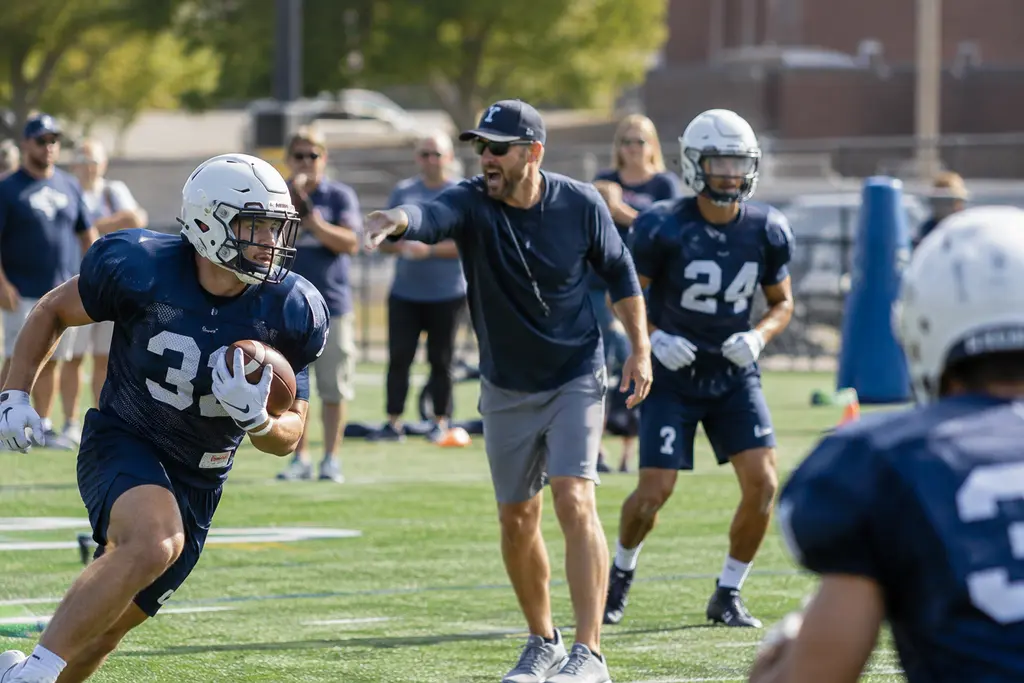

Texas State Recruiting has moved into a different phase since the Bobcats entered the Pac-12 effective July 1, 2026, a shift framed by Texas State as a new athletics era through Hillviews Magazine. For San Marcos, the most important part of the move is not just the conference name. It is how the football program can use a larger stage to stay connected to Texas high school players, families, coaches and communities that already sit within driving distance of UFCU Stadium.
The early evidence points to a clear local priority. In June 2026, the Bobcats secured 16 commitments for the Class of 2027, with 14 from in-state high school recruits, according to Yahoo Sports. That same report noted the class included Daylon Gordon from Wylie, described as the program’s first four-star recruit, and placed Texas State at No. 74 nationally at that point in the cycle. Those details matter because they show the Pac-12 move has already become part of a Texas-first recruiting conversation.
Texas State Recruiting After The Pac-12 Move
Texas State Recruiting Starts With Texas Players
The clearest sign in Texas State Recruiting is the in-state balance of the 2027 class. Fourteen Texas high school commitments out of 16 total commitments in June 2026 is not a small sample in messaging terms. It gives the staff a simple point to carry into homes and high school offices: the Bobcats are entering a wider conference setup without walking away from the state that built the roster.
That is especially important in Central Texas, the I-35 corridor, the Dallas-Fort Worth area, Greater Houston and San Antonio. Those regions have enough high school depth to feed multiple FBS programs. Texas State does not need to pretend it is recruiting like a school outside the state. Its strongest pitch can be more direct: play close enough for family support, represent a Texas university, and compete under a Pac-12 label that now carries a different level of attention.
A First Four-Star Marker Carries Local Weight
Daylon Gordon’s commitment gives the staff a milestone it can point to without stretching the story. A first four-star recruit is not a full roster rebuild by itself, and one player does not define a class. Still, for a program trying to change how in-state prospects view San Marcos, that type of commitment can influence perception among other recruits in the same cycle.
The value is strongest when it reaches high school coaches and teammates. If a higher-rated Texas player sees Texas State as a valid Pac-12 path, that gives the Bobcats a better chance to remain in conversations that once may have moved quickly toward larger brands. The program still has to develop players and win recruiting battles, but the door into those conversations appears wider than it was before the conference transition.
How The Pac-12 Pitch Reaches Local Players
Visibility Is Part Of The Recruiting Message
For Texas State Recruiting, that distinction matters because visibility is often tied to trust. Families want to know where games can be seen, how a player will be promoted and whether the program has the resources to support development. The university’s Pac-12 era includes access to Pac-12 Enterprises, with multimedia and branding resources that Texas State has tied to increased visibility and athlete opportunity through its official university magazine coverage.
That does not mean every local prospect will suddenly choose San Marcos. Recruiting in Texas remains crowded, and the Bobcats still compete against long-established Power Four brands, regional FBS programs and out-of-state schools with deep Texas ties. What has changed is the opening sentence of the pitch. Texas State can now sit in a living room and describe itself as a Texas-based Pac-12 option, not only a regional alternative.
NIL Conversation Needs A Local Lens
Name, image and likeness is part of the modern recruiting discussion, but Texas State’s best local angle is not only about headline numbers. The stronger community-centered pitch is about market fit. A player from Wylie, San Antonio, Austin, Houston or Central Texas can build recognition near home while playing for a university trying to raise its profile across the state.
The multimedia side of the Pac-12 transition can help that message. Video content, athlete storytelling and broader brand placement give recruits a clearer picture of how their college careers might be seen. For local prospects, that matters because visibility is not abstract. It can affect family engagement, high school pride, youth camp interest and how a player’s hometown follows his college development.
Roster Building Starts Close To Home
The 2027 Class Shows A Texas-Heavy Direction
A 14-of-16 in-state commitment split is a roster-building signal. It says the Bobcats are not using Pac-12 membership as a reason to abandon Texas roots. They are using it as a reason to reframe those roots. That approach fits the program’s geography. San Marcos sits between Austin and San Antonio, close enough to several major recruiting areas to make repeated relationship-building realistic.
Recruiting still depends on position need, coaching evaluations, academic fit and player development plans. A conference move does not change those basics. It can, however, change how a player compares options. If Texas State offers a local connection, a larger conference stage and a credible development plan, the staff can challenge older assumptions about where high-end Texas players should go.
Retention Starts Before Signing Day
The post-Pac-12 plan is not only about adding names to a commitment list. It is also about keeping relationships strong after a player commits. Local recruits often hear from many schools through the end of the cycle. Texas State’s staff has to keep families involved, maintain communication with high school coaches and show how each player fits into the roster.
That is where San Marcos can be an advantage. A local or regional recruit can visit campus, return for games, bring family members and stay connected without the distance that comes with many western conference destinations. The Bobcats now play under a broader conference banner, but their day-to-day recruiting rhythm can still feel personal and Texas-based.
We have tracked that same theme in the Bobcats’ local push, including how Texas State keeps talent close while turning Pac-12 membership into a stronger in-state pitch.
The Community Value Behind Texas State Recruiting

High School Relationships Still Drive The Pipeline
Texas State Recruiting is also a community story. Every in-state commitment connects the university to a high school staff, a family, a hometown and a local football circle. Those ties matter in Texas, where high school programs often become long-term referral points for college staffs. If Texas State develops players from those schools, the next recruit from the same area has a clearer example to study.
That kind of trust is built through repeated contact, not one press release. Coaches need to know how Texas State evaluates prospects. Families need to see academic and athletic support. Players need to understand whether they are being recruited for a real role or only for depth. The Pac-12 label may open doors, but the staff’s local follow-through will decide how much of that interest turns into signed players.
San Marcos Benefits When Local Players Stay Connected
There is also a practical fan-culture piece. When the roster includes players from Texas high schools, more families and former teammates have reasons to follow the Bobcats. That can help game-day energy, youth interest and community identity around the program. It also gives local media and high school communities more direct storylines to follow from Friday nights to college Saturdays.
The most useful parts of the plan are easy to identify:
- Keep Texas high school coaches central to the evaluation process.
- Use Pac-12 visibility without losing the program’s San Marcos identity.
- Show local recruits a path that includes development, exposure and family access.
- Turn early 2027 momentum into signed players and long-term roster depth.
Those points are not flashy, but they are the substance of a recruiting strategy. The Bobcats do not need to sound like a national brand with no roots. They need to sound like a Texas program with a bigger conference stage.
Why The Local Talent Plan Matters In San Marcos
The Next Test Is Converting Attention Into Depth
Texas State’s Pac-12 move has already changed the way the program can introduce itself to recruits. The early 2027 commitment numbers, the first four-star marker and the in-state focus all support that. The harder part is turning attention into signed classes, then turning those classes into productive college players.
That is the real post-Pac-12 test for Texas State Recruiting. The Bobcats have a stronger story to tell, but the program still has to prove that San Marcos can be a place where Texas high school talent develops, plays meaningful snaps and stays connected to home. If that happens, the conference transition will mean more than a new schedule. It will become a stronger local pipeline with Texas players at the center of the roster plan.