
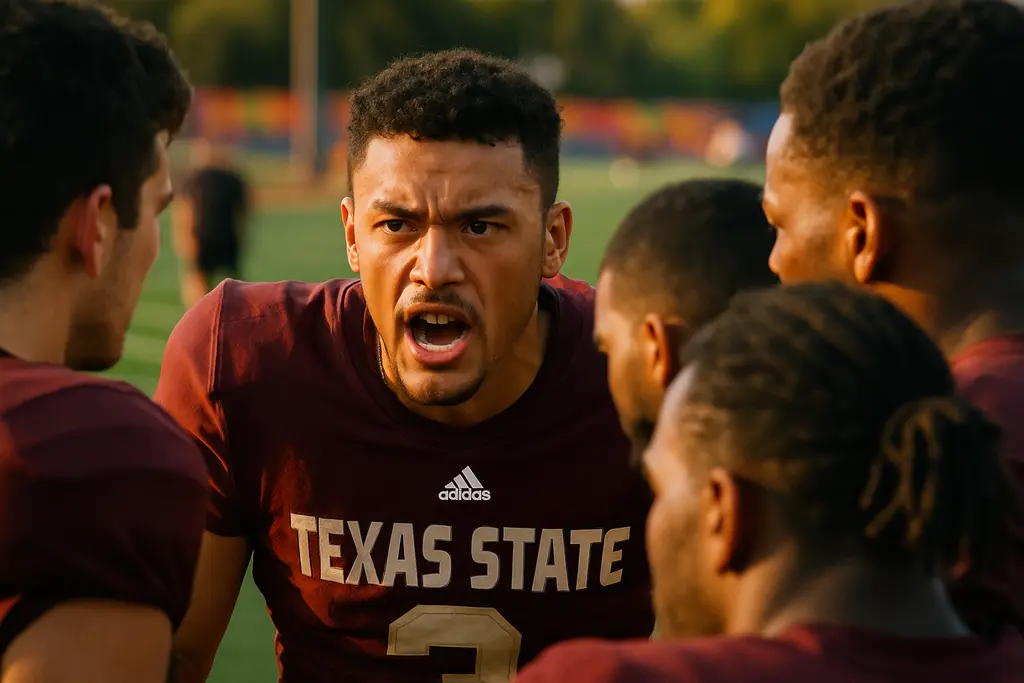

Texas State rosters are being shaped by more than player movement. As of September 23, 2026, the Bobcats’ move into the Pac-12, new health and hospitality partnerships, football transfer additions, coaching changes and a $50 million university campaign have all pushed the athletic department into a different operating tier. For San Marcos, that shift is not abstract. It affects how teams train, how depth charts are built, how families experience venues and how Texas State sells its athletic future to recruits.
Why Texas State rosters Changed Around Support
Conference Membership Raised The Competitive Bar
Texas State officially joined the new Pac-12 Conference as a foundational member effective July 1, 2026, according to Texas State’s Pac-12 announcement. That date matters because the move shifted the Bobcats from a regional conference identity into a league structure with broader travel, larger brand demands and deeper roster expectations across sports.
Football draws the loudest attention because depth charts are visible every Saturday, but the broader impact touches every program. A Pac-12 badge changes the recruiting conversation for volleyball, basketball, baseball, softball and Olympic sports. It gives coaches a different answer when athletes ask about competition level, exposure and support services. The school still has to win those recruiting battles, but the pitch changed on July 1, 2026.
The football roster shows how quickly the program tried to meet that new standard. In January 2026, after the January 2-16 transfer portal window, Texas State added 19 student-athletes to the football program following 19 early signees in December 2025. Those additions covered several areas, including offensive line, defensive line, linebacker, wide receiver and kicker. That is not a cosmetic roster refresh. It is the kind of volume a staff uses when it is trying to raise competition across position rooms before a tougher schedule cycle.
How Texas State rosters Feel The Partnership Shift
Personnel decisions are still made by coaches, but support systems influence who can develop and how fast they can be ready. Texas State’s August 2026 partnerships fit that part of the story. On August 19, 2026, the university expanded its long-running relationship with CHRISTUS Health, making it an official health-care partner. The announcement included scholarship support, wellness facilities for student-athletes and CHRISTUS Health visibility on Texas State Athletics uniforms across home and away competition starting in fall 2026.
For Texas State rosters, that health-care alignment matters because athlete support has become part of roster retention. Players and families ask about treatment access, wellness resources and scholarship backing before they sign. A visible medical partnership does not guarantee better performance, but it gives coaches a clearer structure to discuss care, recovery and day-to-day support.
One day later, on August 20, 2026, Texas State Athletics announced an Aramark partnership for concessions and hospitality across Bobcat athletic venues. The research notes list a planned jump from about 50 food and beverage locations to more than 120, new Scan-and-Go technology and enhancements at UFCU Stadium and the University Events Center. That sounds like a fan-service story first, but it also connects to recruiting. Game-day presentation helps shape the impression prospects get when they visit San Marcos with parents, coaches or high school teammates.
Football Depth Is The Clearest Roster Test
Transfers Put Pressure On Returning Players
Texas State’s 2026 football roster, as described in the research notes for September 23, 2026, includes 109 players. The roster mix was listed at 44 transfer additions, 31 high school signees and 34 returning players. Those numbers show a program trying to balance quick experience with longer-term player development.
That mix creates opportunity, but it also creates weekly pressure. Transfers arrive expecting to compete. Returning players know their roles are not protected by seniority. High school signees need a path that does not stall behind older portal additions. That is where roster construction becomes coaching work rather than spreadsheet work.
Quarterback is the cleanest example. Brad Jackson returned as the starter after a 2025 season in which he threw for 3,224 yards, completed 251 of 352 passes, posted a 71.3 completion rate and threw 21 touchdowns. The research notes also state that his completion percentage and passing efficiency set Texas State single-season records. Behind him, Boston College transfer Shaker Reisig was expected to provide depth. That setup gives Texas State a returning lead option with a transfer backup, a useful structure for a season with new conference demands.
The line of scrimmage also reflects the roster plan. The 2026 transfer group included three offensive linemen from Power-Four schools, including one from North Carolina, plus defensive additions such as Kaleb James from Arkansas and Phillip Bradford from McNeese. Those names matter because Pac-12 play will test Texas State’s ability to hold up through longer travel, stronger fronts and different offensive styles.
New Defensive Staff Changed The Evaluation Lens
The staff changed, too. In January 2026, Texas State hired defensive coordinator Will Windham from South Alabama. Marcus Patton came in as secondary coach, and Chris Gistorb joined as defensive line coach. Those hires meant defensive players were not only competing against new transfers; they were also being evaluated by new voices.
That is often where depth charts move the most. A returning starter may fit one coordinator’s system better than another. A reserve may get a fresh chance because a new position coach values a different trait. A transfer may be recruited for a defined role, then still have to prove he can handle calls, communication and tackling demands in live games.
Preseason depth-chart projections in the research notes placed 15 of 28 transfer arrivals into the two-deep, with seven projected as starters. Those were projections rather than official locked roles, so they should be treated with caution. Still, they show the scale of the staff’s roster bet. Texas State did not add portal players only for practice depth; the program expected several of them to compete for meaningful snaps.
For readers tracking the football side closely, our deeper breakdown of Texas State transfers gives more context on how portal depth reshaped the 2026 roster conversation in San Marcos.
Partnerships Are Now Part Of Player Development

Scholarships And Facilities Support Retention
Texas State’s “Light the Star” campaign, announced February 19, 2026, set a $50 million fundraising goal tied to student-athlete scholarships, facility upgrades, performance centers, season-ticket growth and brand expansion, according to the university’s Light the Star campaign. That timing was no accident. The fundraising push was tied directly to the school’s move into the Pac-12 era.
Scholarship support is a roster issue. Facility upgrades are a roster issue. Performance spaces are roster issues. When a program enters a stronger competitive setting, it cannot ask coaches to recruit at a higher level without backing the daily experience athletes live through. Texas State’s campaign connects donor energy to the practical needs behind player retention and development.
In San Marcos, those investments also carry a community layer. Better venues and services can draw more families to games, keep alumni engaged and give local businesses more traffic around home events. For athletes, a fuller stadium or arena changes the feel of competition. For recruits, it shows whether the community has bought into the move.
Venue Experience Helps Shape Recruiting Weekends
The Aramark partnership is easy to view only through concession lines, but athletic departments know venue experience is part of the recruiting weekend. A prospect sees the field, locker room and training setup, but families also notice parking flow, food access, hospitality areas and the energy inside the building.
The planned expansion from roughly 50 to more than 120 food and beverage locations across Bobcat athletic venues was a significant operational change. Scan-and-Go technology also reflected a push to cut down friction for fans. At UFCU Stadium, those details can shape how a Saturday feels before kickoff and after the final whistle. At the University Events Center, they matter for basketball, volleyball and other indoor events where crowd comfort can affect repeat attendance.
None of that replaces coaching, scheme or strength training. It does, however, help build the environment around the athletes. In the Pac-12 context, Texas State is not only competing with opponents on the field. It is competing with peer schools for attention, visits, commitments and donor belief.
What Texas State rosters Say About The Pac-12 Step
The Local Standard Has Shifted
The Bobcats’ roster story in 2026 is best understood as a full-department move. Football brought in a large portal class. Defensive staff changes reset evaluation on that side of the ball. The CHRISTUS Health partnership tied medical support, scholarships and wellness facilities to the athlete experience. Aramark’s venue work targeted the fan and recruiting environment. The Light the Star campaign gave the university a public fundraising target that matched the scale of the conference move.
Texas State rosters now reflect a program trying to move faster without losing its San Marcos roots. The test is whether added transfers, stronger support systems and better venue operations turn into steadier player development across sports. The Bobcats have changed the structure around their teams. The next measure is how well athletes grow inside it.