
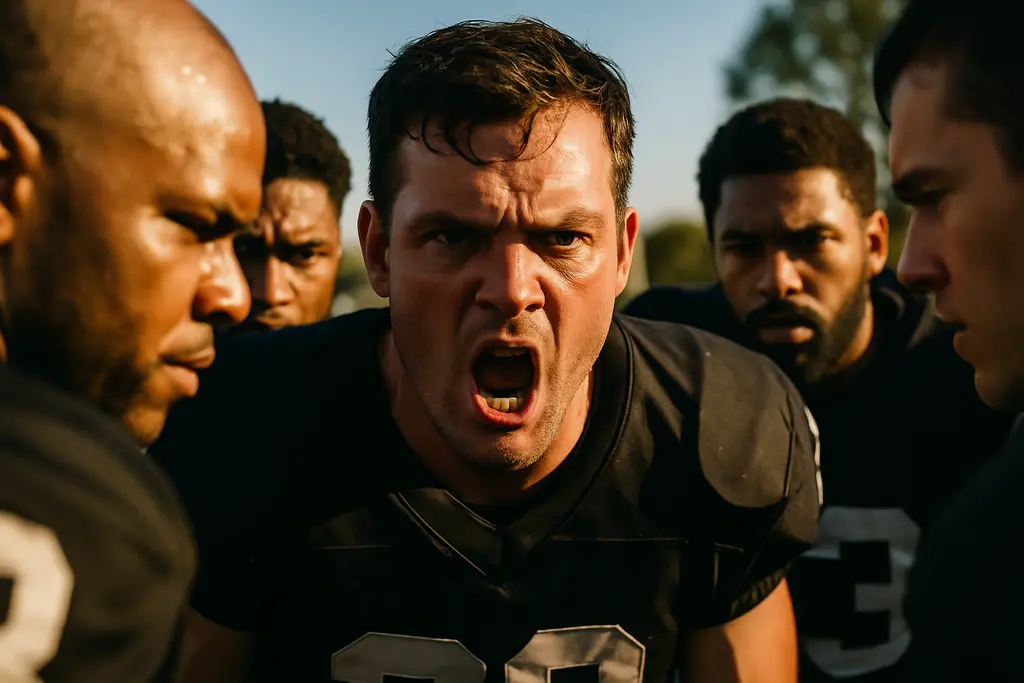

Brad Jackson Leadership is no longer just a player-profile angle for Texas State. It is one of the main football questions around San Marcos as the Bobcats weigh a proven 2025 résumé against a 2026 start that, through the two-game statistical snapshot available from CBS Sports, has required correction. For a quarterback who was recognized nationally before the season and carried program-record production into the fall, the next step is less about labels and more about how his command affects the full depth chart.
Brad Jackson Leadership Starts With Proof
Brad Jackson Leadership Built In 2025
Texas State had a clear reason to enter the 2026 season with Jackson at the center of its offensive identity. On August 20, 2026, he was named to the 2026 Davey O’Brien National Quarterback Award Preseason Watch List, a group recognizing 30 returning college quarterbacks, according to the Texas State announcement. That same official release credited Jackson with a 2025 season that set school records for total offense with 3,968 yards, total offense per game at 305.2, and touchdowns responsible for with 38.
Those numbers matter because leadership at quarterback has to show up in repeatable production. Jackson completed 251 of 352 passes in 2025, a 71.3 percent rate, for 3,224 yards, 21 touchdowns and seven interceptions. Texas State also credited him with a 164.0 pass efficiency rating, while noting that his completion percentage ranked fifth nationally and his passing efficiency ranked seventh. That is not a small statistical base. It is the kind of full-season evidence that gives a locker room confidence in the player setting protections, managing tempo and answering hard moments after a stalled drive.
The rushing profile adds another layer. Jackson ran for 744 yards and 17 touchdowns in 2025, with Texas State noting that the touchdown total ranked fifth among FBS quarterbacks. That does not make him only a runner. It makes him a pressure point for defensive coordinators and a stabilizer for his own offense. When the passing game needs rhythm, the threat of a quarterback run can help keep the defense honest. When a red-zone possession tightens, a quarterback willing to carry contact changes the math for a play caller.
Captaincy Changes The Depth Chart Conversation
Jackson’s 2025 season also included the kind of availability coaches value. Texas State listed him as a team captain, credited him with appearing in every game and starting all 13, and named him Armed Forces Bowl MVP in its preseason watch list release. Availability is a leadership trait because it keeps the practice week organized. The first-team receivers, backs and linemen work off the same cadence. The second-team players get a clearer model. Younger quarterbacks know what the standard looks like rather than guessing from a distance.
That is where Brad Jackson Leadership connects directly to roster construction. A quarterback with that many snaps becomes part of player development beyond his own stat line. Receivers learn how he wants routes flattened or extended. Running backs learn where the mesh point has to be. Offensive linemen learn how long they must hold up on deeper concepts compared with quick-game calls. For more roster context, our earlier Texas State depth chart analysis looked at how quarterback stability fits into the wider competition for roles.
The 2026 Start Demands A Different Kind Of Command
Two Games Show The Adjustment Point
The early 2026 numbers have not matched Jackson’s 2025 pace. Through the two games reflected on his CBS Sports profile, Jackson had completed 32 of 53 passes, a 60.4 percent rate, for 342 yards, one touchdown and three interceptions, with a 109.5 quarterback rating, according to his CBS Sports player page. That is a small sample, but it is large enough to create a coaching point.
The leadership test after a start like that is not whether a quarterback can point to last season. It is whether he can narrow the operation now. Three interceptions in two games put stress on the defense, special teams and sideline energy. A 60.4 percent completion rate, compared with 71.3 percent in 2025, suggests the offense has not yet found the same timing that made Jackson’s prior season so efficient. Those are not character judgments. They are football problems, and quarterbacks are judged by how quickly they help solve them.
How The Staff Can Help The Quarterback
Texas State’s staff has a practical balance to strike. Jackson earned national preseason attention because he could produce both through the air and on the ground. The answer is not to shrink the offense so much that it removes what made him difficult to defend in 2025. The answer is to use the depth chart around him in a way that protects possessions while allowing his best traits to surface.
That can mean leaning on defined reads, high-percentage throws and designed movement when the pocket picture gets cloudy. It can mean using his rushing threat selectively rather than asking him to rescue every possession. It can mean making sure the route distribution gives him early answers and not just downfield options. None of those points require a public playbook leak. They are basic quarterback management principles that matter more when an offense is trying to move from last year’s record-setting standard into a new week-by-week rhythm.
What His Profile Means For San Marcos

Veterans Shape Younger Players
In a college program, the starting quarterback’s influence extends past the huddle. For Texas State, Jackson’s captaincy and 13 starts in 2025 give him standing that younger players can recognize. That matters in San Marcos because the Bobcats’ growth is not only about one high-end quarterback season. It is about whether the program can keep turning production into habits that survive roster movement, tougher scouting reports and uneven stretches.
Brad Jackson Leadership is most valuable when it helps the offense respond after mistakes. A quarterback who has already set program records does not need to chase proof on every snap. He needs to help the unit get to the next manageable down, protect the ball, and keep the sideline from drifting after a turnover or missed series. That sounds simple, but it is often where veteran starters separate themselves from talented players still learning how to carry a team.
Receiver Timing And Run Threat Matter
Jackson’s 2025 passing line showed rare efficiency for the program, but the rushing production is what made the profile feel complete. A quarterback who accounted for 17 rushing touchdowns forces linebackers and safeties to hesitate. That hesitation can open throwing windows. It can help receivers separate late. It can also put a defense in conflict near the goal line, where space disappears quickly.
For the Bobcats, the player-development angle sits in that connection between quarterback and supporting cast. Receivers are not just catching passes; they are adjusting to a quarterback who can extend plays and stress contain rules. Offensive linemen are not only pass blocking; they are working within an offense where the quarterback’s legs can turn a crease into a scoring chance. Running backs are not only carrying the ball; they are tied to option looks, protection calls and timing that depend on Jackson’s decision-making.
Brad Jackson Leadership In San Marcos
Brad Jackson Leadership now sits at an interesting point. The 2025 evidence is strong: program records in total offense, high national efficiency marks, a major preseason watch list honor, a captain’s role and full-season availability. The early 2026 data is more uneven: two games, a lower completion rate, one touchdown and three interceptions in the CBS Sports snapshot. Both parts of the story are true, and that is why his role is worth watching closely from a team-building perspective.
For Texas State supporters, the conversation should not be limited to whether Jackson repeats every number from 2025. College football rarely works that cleanly. The better question is whether he can turn last season’s production into leadership that steadies the 2026 offense. If he does, the benefits will reach beyond his own box score. The receivers get cleaner timing. The offensive line gets clearer rhythm. The defense gets fewer sudden-change possessions. The local crowd gets a team that looks organized even when the game tightens.
That is the standard Jackson helped create with his own play. Now the Bobcats need that standard to guide their week-to-week development.