
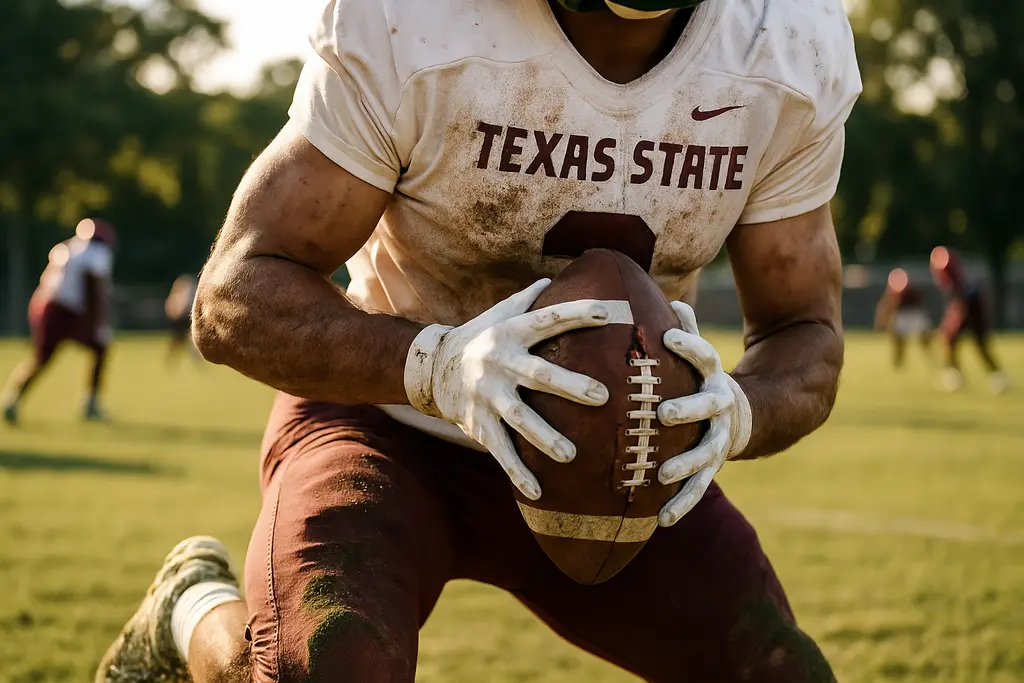

Texas State roster discussion carried extra weight around the Bobcats’ matchup with UTSA on September 12, 2026. Because that date had already passed by September 28, 2026, the best way to view the week is as a roster checkpoint rather than a preview. The available verified information does not provide the final score or postgame snap data, so the focus here stays where the facts are strongest: transfer movement, staff change, position continuity and why those details mattered to San Marcos before and after the I-35 rivalry date.
Why The Texas State roster Shift Mattered For UTSA
A Rivalry Week With More Than One Personnel Question
Texas State and UTSA always bring regional context because the matchup pulls in Central Texas, San Antonio and alumni communities that follow the program closely. On September 12, 2026, that local interest was tied to a bigger football question: how much of the Bobcats’ identity had changed through the portal and offseason staff moves?
The clearest verified portal snapshot shows Texas State added 19 players and lost 18 players in the 2026 class, a net change of plus one, according to the listed Texas State transfer portal tracker. That number does not tell the full football story by itself. A team can be nearly even in total movement and still look different at certain positions, especially if departures and arrivals are concentrated in the offensive line, defensive line or secondary.
That is why the UTSA week conversation had to be more specific than simply saying Texas State had portal turnover. The better question was where the roster changed and where it stayed stable. In rivalry games, familiarity can raise the pressure on communication, tackling angles and protection calls. Newcomers do not need years in the program to contribute, but they do need clear assignments and trust from the players beside them.
Texas State roster Continuity At Quarterback And Receiver
The most reassuring part of the roster picture came at the top of the skill-position structure. The research notes identify Brad Jackson as the established starting quarterback, with Beau Sparks and Chris Dawn Jr. returning as veteran wide receivers. Those details matter because quarterback-receiver continuity can steady an offense while other groups reset.
For San Marcos fans, that continuity gave the Bobcats a clearer offensive reference point entering UTSA week. When an offensive line adjusts or a running back rotation changes, timing in the passing game can keep an offense from starting from scratch. A returning quarterback and proven receivers can also help new players learn the pace of the system in live settings.
The Texas State roster still carried uncertainty in the supporting structure. The research notes point to new wide receiver depth with Zechariah Sample and a running back shift involving Torrance Burgess Jr., Jaylen Jenkins and Davian Jackson. Those names are useful for understanding the personnel mix, but the strongest verified takeaway is broader: the Bobcats entered September with continuity at premium skill spots while sorting through new pieces around them.
Where The Bobcats Changed Before September 12
Portal Balance Did Not Mean Position Balance
A plus-one net portal change can sound modest, but roster building is not counted only by head count. A team that loses and adds almost the same number of players can still experience major change if the movement hits the trenches. The research notes identify offensive line, defensive line and wide receiver as areas with notable turnover.
That made the UTSA game a meaningful test of fit. Offensive line changes affect far more than rushing totals. They shape the quarterback’s launch points, the confidence to use longer-developing routes and the way a staff sequences early downs. Defensive line changes have the same broad reach on the other side. If the front cannot hold gaps or create pressure without constant help, the back seven has to cover more grass and take on tougher run-support angles.
The research notes list William Boone, Jaylen Early and Rasheed Jackson among incoming offensive line additions expected to factor into the rotation. They also note defensive-front changes after departures and new arrivals. Without official postgame participation data in the research, it would be irresponsible to assign exact impact from the UTSA game. What can be said is that those position groups were central to how the Bobcats’ staff had to measure readiness around September 12.
- Offensive line: turnover placed attention on protection calls, run fits and communication.
- Defensive line: new rotation pieces had to replace departed size and snaps.
- Receiver room: returning veterans gave the offense a known starting point while new depth developed.
- Secondary: transfer movement created competition for roles after departures in the defensive backfield.
Why The Trenches Framed The Local Conversation
The line-of-scrimmage discussion mattered because UTSA week was not an abstract roster audit. It was a regional matchup with a crowd that could read the game through physical play, third-down execution and whether Texas State could stay on schedule. That is where roster movement becomes visible to the community.
If a quarterback has to speed up every read, fans notice. If a running back has no clean crease, fans notice. If the defensive front cannot limit early-down gains, the stadium feels the pressure before the box score fully explains it. The Texas State roster conversation, then, was not just about who arrived or left. It was about whether the reshaped position groups could function together under rivalry-week strain.
For readers tracking the broader roster build, the UTSA week questions connect naturally to the larger 2026 personnel story covered in our related breakdown of how Texas State transfers shaped the 2026 roster. The local thread is the same: portal additions only become meaningful when they settle into real roles in San Marcos.
How Staff Movement Framed Defensive Evaluation
Will Windham’s Arrival Changed The Defensive Lens
Texas State’s defensive evaluation also had a staff component. On December 19, 2025, the program hired Will Windham from South Alabama as defensive coordinator, and Marcus Patton and Chris Gistorb also joined the staff as secondary coach and defensive line coach, respectively, according to the official Texas State staff announcement.
That matters because defensive roster change is not only about replacing names. A new coordinator and new position coaches can adjust teaching language, meeting-room priorities and how rotations are evaluated. Even when the base goals stay familiar — fit the run, limit explosive plays, tackle in space — the details of how players are taught can affect how quickly a unit settles.
The research notes point to secondary and front-seven adjustments, including transfer additions intended to help cover departures. The verified staff change gives those personnel shifts a clear frame. The Bobcats were not simply asking new defensive players to step into old routines. They were working through a staff reset that touched the secondary and defensive line rooms directly.
Secondary Depth Carried A Different Type Of Pressure
The secondary was another spot where the UTSA matchup could reveal trust levels. Defensive backs are often judged harshly because mistakes happen in open space, but their work depends heavily on the pass rush, linebacker spacing and sideline communication. When a program has defensive backfield departures and incoming replacements, the first public tests often come against regional opponents that know how to create emotional pressure.
For Texas State, that made September 12 a useful marker for alignment more than a final verdict. A new defensive staff and transfer movement can look uneven early, then settle as roles become clearer. The key for the Bobcats was whether the defense could identify dependable combinations, especially in passing situations and late downs.
The Texas State roster picture on defense should be read with care because the available research does not include official UTSA-game snap counts, injury updates or coach comments from after the matchup. That uncertainty should not be filled with guesses. The supported point is that staff change and transfer movement made defensive depth one of the most important storylines surrounding the rivalry week.
What UTSA Week Said About The Texas State roster
A Checkpoint For San Marcos, Not A Finished Answer
The September 12 game against UTSA sat at the intersection of roster building and local identity. It gave San Marcos a chance to evaluate how the Bobcats looked after adding 19 portal players, losing 18 and changing defensive leadership. That does not mean one rivalry week answered every personnel question. It means the week gave the community a sharper way to understand which position groups were stable and which ones were still being tested.
The strongest supported read is that Texas State had continuity where it mattered most for offensive organization: quarterback and top receiver experience. Around that core, the program had to sort out running back usage, offensive line combinations, defensive-front rotation and secondary depth. Those are not minor details. They influence play-calling, field position and how a team handles momentum swings in a rivalry setting.
For the local fan base, the takeaway is practical. The Texas State roster was not defined only by the number of players in and out. It was defined by where those moves landed. The Bobcats had enough continuity to avoid a full reset, but enough turnover to make September a meaningful test of chemistry.
That is why UTSA week remains useful even after the date passed. Without verified final-score context in the provided research, the responsible analysis stays focused on structure. Texas State’s roster story before and after September 12 was about balance: familiar offensive leadership, new line-of-scrimmage questions, defensive staff change and a community watching closely to see which newcomers could become trusted contributors.