


Texas State cheer has moved into the 2026-27 athletic year with a bigger roster, broader recruiting reach and a clear development story inside the Bobcats’ spirit program. Texas State finalized a 72-athlete cheer roster on May 13, 2026, with 31 members on the coed team and 41 on the all-girl squad, according to the school’s official roster announcement. For San Marcos, that is more than a headcount. It gives the program more bodies to train, more experience to spread across game day settings and a larger pipeline for future leadership.
How Texas State cheer Built Its 2026-27 Depth
Texas State cheer Roster Snapshot
The headline number is 72 student-athletes, but the structure matters just as much. The coed team sits at 31 members, while the all-girl squad has 41. The all-girl group increased by four athletes from the prior season, a sign that Texas State is giving that side of the program more room to develop competitive and performance depth.
For Texas State cheer, that depth affects more than sideline presence. Cheer is a repetition-heavy sport built on timing, trust and physical consistency. A larger roster can help distribute training demands while allowing coaches to shape groups by experience level, stunt responsibility and game day needs. It also creates more internal competition, which is healthy when managed well. Returners have to keep sharpening. First-year athletes have a clearer path to earn trust. Second-year and third-year members become the bridge between both groups.
Class Balance Across Two Squads
The coed team includes five fourth-year athletes, 10 third-year athletes, six second-year athletes and 10 first-year athletes. That mix gives the group a strong middle class, with 16 members in their second or third year. In roster terms, that middle layer is valuable because those athletes have enough time in the program to understand expectations while still having room to grow into bigger leadership responsibilities.
The all-girl squad has seven fourth-year athletes, five third-year athletes, 12 second-year athletes and 17 first-year athletes. That is a younger profile than the coed team, especially with 17 first-year members. It also gives the staff a chance to build continuity over multiple seasons if those athletes stay in the program and develop through the same training standards.
- Coed team: 31 members, with 10 first-year athletes and 15 upperclass athletes in their third or fourth year.
- All-girl squad: 41 members, with 17 first-year athletes and 12 second-year athletes forming a large young core.
- Returning group: 47 student-athletes from previous seasons across the program.
Why The Expanded Roster Matters In San Marcos
Returners Give The Room A Base
The 47 returning student-athletes are the most important part of the roster story. Expansion can create energy, but returners create standards. They know how practices run, how performance expectations carry into game day and how the program wants to represent Texas State in public settings. In a sport where trust is tied directly to safety and execution, that returning group gives the staff a foundation for teaching newcomers without starting from zero.
That matters in San Marcos because the spirit program is one of the most visible parts of the athletic department’s relationship with students, families and alumni. Cheer athletes are present at games, campus events and community-facing moments that shape how people experience Bobcat sports. A deeper roster gives the program more flexibility to cover those demands while still keeping development at the center.
There is also a connection to the wider athletic calendar. As Texas State builds interest around home events, the game day environment becomes a shared project between teams, spirit squads, bands, students and fans. That is why roster depth in the cheer program connects naturally with the broader home-event planning covered in Texas State promotions. The athletes on the sideline help set the pace for crowd involvement, especially during long stretches when energy can dip.
Newcomers Stretch The Recruiting Map
The incoming group also shows how far the program’s reach has grown. Texas State reported incoming athletes from Hawaii, Illinois, Tennessee, Florida, Minnesota, Oklahoma and Germany, describing it as the largest out-of-state and international diversity in program history. That does not erase the local identity of the program; it adds to it. San Marcos remains the center point, but the athlete pool is no longer limited to a narrow recruiting radius.
That kind of reach can raise expectations inside the room. Athletes arriving from different cheer backgrounds may bring different training habits, stunt styles and competition experience. The challenge for the staff is to turn that variety into a unified program identity. The payoff can be a deeper skill base and a stronger daily training environment.
What The 2025-26 Results Say About Momentum
A First National Benchmark
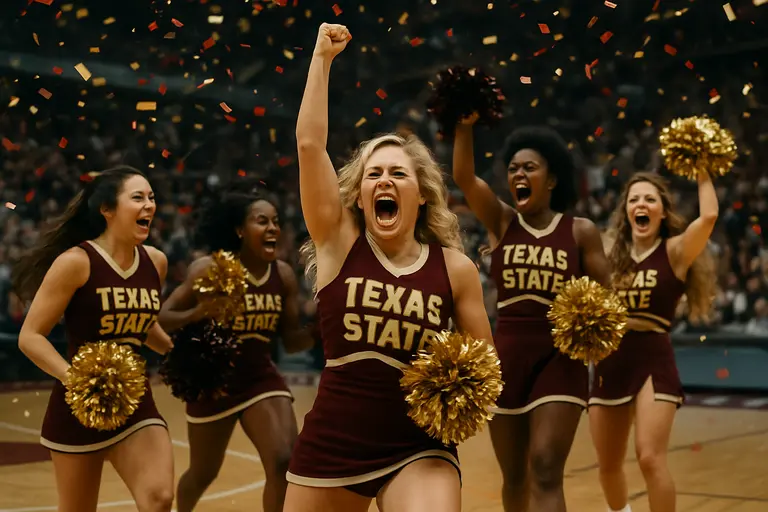
The expanded 2026-27 roster did not appear in isolation. It followed a 2025-26 campaign in which the game day squad placed seventh in its first appearance at the UCA College National Cheerleading Championship, while the Boko team placed third in its first appearance. Those results matter because first appearances often serve as a measuring point. They show where the program stands against a wider field and where growth areas may exist.
For a developing program, national placement can help with recruiting and retention. Prospective athletes can see that Texas State is not only building numbers but also putting groups into competitive environments. Returners can see evidence that their work has produced results beyond campus. Coaches can use those benchmarks to set clearer expectations for training intensity and execution.
Development Shows Up Before Competition
Player development in cheer is not always as easy to chart as a football depth chart or a basketball rotation. There are no tackles, shooting percentages or innings pitched. The progress shows up in clean timing, stronger technique, fewer missed assignments and the ability to perform under noise, fatigue and pressure. A larger roster gives Texas State more options, but it also raises the need for clear teaching structure.
The class breakdown suggests two different development timelines. The coed team has a strong group of third-year athletes who can push standards now. The all-girl squad has a large first-year group that could shape the program across several seasons. If those athletes develop together, the 2026-27 roster could become a key bridge between the program’s first national benchmarks and its next stage of competitive maturity.
What Texas State cheer Means For Game Day
Community Fit Around The Bobcats
The next step for Texas State cheer is turning roster growth into a consistent presence that supports the full Bobcat game day experience. The program’s athletes are not just performers placed around a field or court. They are part of the rhythm of local sports in San Marcos, from student engagement to alumni connection to the way families remember a day on campus.
That community value is why the roster expansion deserves attention in a player profile space. These student-athletes train, compete and represent the university while balancing academic life. The public often sees the finished routine or the sideline performance. The real development happens in repeated practices, peer leadership and the gradual trust that forms between veterans and newcomers.
The Roster Story To Track
The key roster question is not simply how many athletes Texas State carries. It is how the program uses its 47 returners, how quickly the first-year group adjusts and how the coed and all-girl teams build separate identities under one spirit program. The 2026-27 group has size, experience and a wider recruiting base. Now the measure is consistency.
For San Marcos, that makes the expanded cheer program one of the more interesting development stories around Texas State athletics. It is local, visible and tied directly to the energy surrounding Bobcat sports. If the roster balance holds, the 2026-27 squad gives Texas State a stronger platform for both game day impact and future competitive growth.