
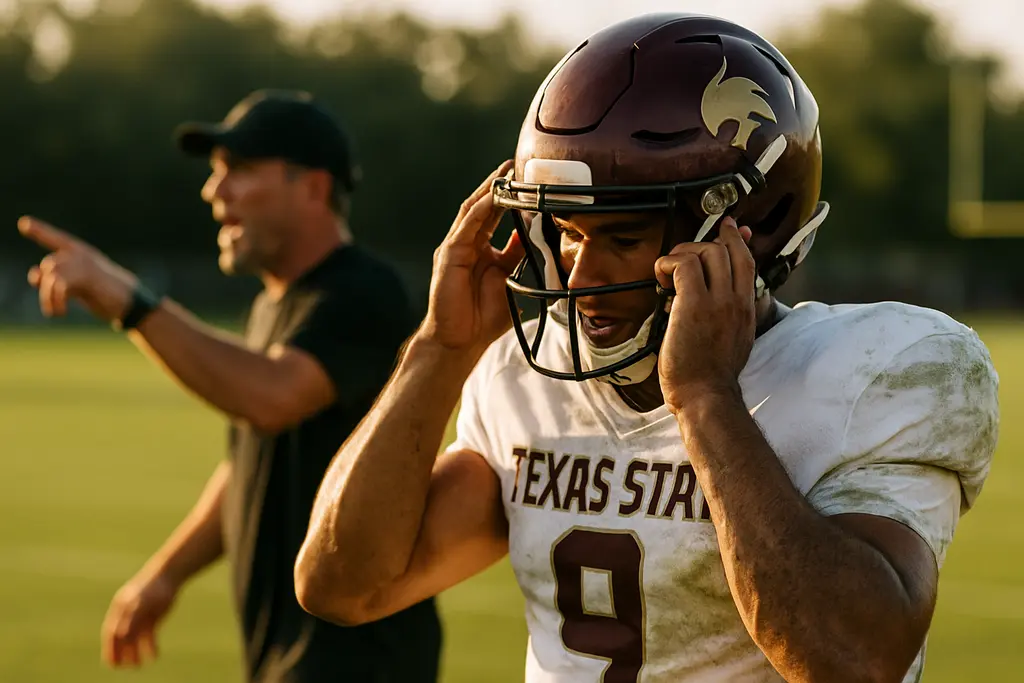

The Texas State Depth Chart tells a San Marcos story bigger than names lined up on a practice-field board. As of September 16, 2026, the Bobcats had added 19 players and lost 18 through the transfer portal, a net change of plus one player, according to the TransferPortl team ledger. That narrow net number matters because it shows change without a full roster reset. G.J. Kinne’s program has moved pieces, protected competition, and tried to keep enough familiarity for the locker room to feel connected to the San Marcos climb.
How The Texas State Depth Chart Changed In 2026
Transfer Balance Shows A Small Net Change
The portal count gives the cleanest verified starting point. Texas State did not add a wave that dwarfed the exits, and it did not lose a class-sized group without replacement. The plus-one transfer balance points to targeted churn rather than a complete rebuild. For a local program entering a higher-pressure football stage, that distinction is important for players, families, students, and supporters who have watched the Bobcats build momentum under Kinne.
The roster movement still carries real weight. A net change does not show positional stress by itself. One quarterback departure can matter more than several depth departures elsewhere. One tackle addition can shift the offensive ceiling. One receiver battle can decide whether a third-down route becomes a first down in front of the home crowd at UFCU Stadium. That is why the 2026 chart should be read by position, not only by total arrivals and exits.
The outgoing list in the research includes quarterback Keldric Luster moving to Ball State and wide receiver Ty Mims moving to UAB. Those losses connect directly to two rooms where Texas State needed to define roles: quarterback depth behind Brad Jackson and receiver snaps behind the top two options. The names are not just transaction-line items. They create practice reps, meeting-room changes, and chances for younger Bobcats or incoming transfers to earn trust.
For readers tracking the bigger portal picture, our related breakdown on how Texas State transfers shape 2026 fits with this position-by-position read. The roster story is not finished by the transfer total. It is carried by who wins the daily snaps.
Quarterback And Skill Positions Set The Tone
Texas State Depth Chart Starts With Quarterback
Dave Campbell’s Texas Football reported on March 31, 2026, that Brad Jackson returned as the projected starter, with Gavin Parkhurst and Boston College transfer Shaker Reisig behind him in the quarterback room; that same report identified Beau Sparks and Chris Dawn Jr. as the top two receivers and listed Zechariah Sample, Kylen Evans and Tucker Cusano among the WR3 competition in its Dave Campbell’s roster report. For the Texas State Depth Chart, quarterback is the first place where continuity and competition meet.
Jackson’s return gave the room a clear lead name in the spring reporting, but the presence of Parkhurst and Reisig mattered for daily pressure. Backup quarterback competition can shape a season even when the starter holds the job. It affects tempo periods, scout-team looks, injury readiness, and how confidently coaches can call an offense if the first option has to leave a series. In San Marcos, that room also shapes how fans view the program’s growth. The Bobcats have moved past hoping for one spark. They are trying to build a room sturdy enough for a longer schedule grind.
Receivers Give The Room Its Local Charge
The Texas State Depth Chart at receiver starts with Sparks and Dawn as the top two names from the March report. That gives the offense a defined lead pairing, which is valuable for quarterback timing and play-calling identity. The third receiver battle is where the local intrigue grows. Sample, Evans, and Cusano were identified in that competition, while true freshman La’Keyleon Graves was expected to contribute immediately.
That receiver mix says something about the Bobcats’ roster philosophy. Texas State has known options at the top, a transfer in the WR3 race, returning competition, and a freshman expected to push for a role. That is healthy tension. It asks veterans to keep producing. It gives a young player a real target. It also gives the coaching staff several ways to build packages without relying on one single solution.
The tight end room carries a different kind of question. Blake Smith was identified as TE1 when healthy, while Ty Stamey, Jake Simpson, and Arvis Battle Jr. were competing for backup snaps. That phrase, “when healthy,” is the key. It does not create an injury claim beyond the research, but it does remind us that tight end depth is not a luxury. It impacts short-yardage calls, protection help, red-zone spacing, and how physical the offense can be after halftime.
- Quarterback: Brad Jackson led the spring projection, with Gavin Parkhurst and Shaker Reisig behind him.
- Wide receiver: Beau Sparks and Chris Dawn Jr. were the top two, with a WR3 race involving Sample, Evans, and Cusano.
- Tight end: Blake Smith was TE1 when healthy, while Stamey, Simpson, and Battle competed for snaps.
Offensive Line And Front-Seven Questions Carry Weight
Line Groups Shape Weekly Trust
Not every part of the 2026 two-deep is equally firm from the approved research. The provided notes include details from sources outside the allowed link list for specific offensive-line and defensive-line alignments. Because those details cannot be cited here under the site’s source rules, this analysis should not present a full official September 17 line chart. That restraint matters. Roster writing loses value when it turns uncertain notes into hard claims.
What can be said is that line depth will decide how much of the skill-position talent shows up on game day. A quarterback room with options still needs clean protection. A receiver group with several capable names still needs time for routes to develop. A tight end room competing for snaps still needs clarity on blocking responsibilities. The Bobcats’ transfer balance also suggests the staff understood that no position group could be treated as finished just because the top of the chart looked promising.
That is where the Texas State Depth Chart becomes a weekly trust exercise. Coaches are not only naming starters. They are deciding which linemen can handle a road environment, which backups can survive a sudden drive, and which combinations communicate best under pressure. In college football, especially for a program trying to raise its profile, the second offensive-line group and the rotational defensive bodies often determine whether November football feels sustainable.
The front seven follows the same logic. The research notes point to defensive-line and edge names from sources not approved for citation here, so this article will not assign official roles from that material. The supported takeaway is narrower but still useful: Texas State’s public roster discussion has clearer verified information at quarterback, receiver, tight end, safety, and special teams than it does for every trench spot. That means fans should treat any uncited full defensive two-deep with caution unless it comes from the school, a game book, or a recognized outlet.
Secondary And Special Teams Need Clear Roles
Safety Movement Adds Competition
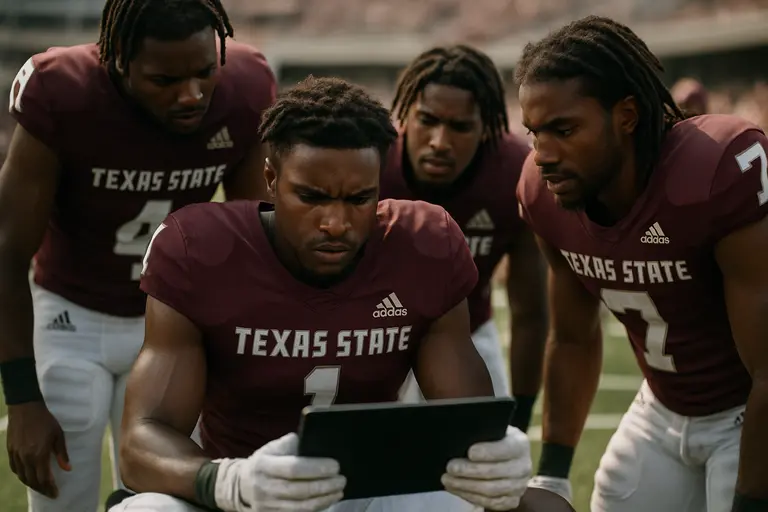
The defensive backfield is one of the more interesting rooms in the verified research. Ryan Nolan was set for a starting safety role in the March reporting. Jayden Lawton moved from corner to safety. Chase Davis and Michael Patterson, a transfer, were part of the competition for safety spots. That is not just a list of names; it is a sign that Texas State was trying to sort out range, tackling, coverage comfort, and communication on the back end.
A corner-to-safety move can matter for the entire defense. It can add coverage background to a deeper alignment, but it also asks a player to see the field differently. Safety play affects run fits, motion adjustments, and how corners can challenge receivers outside. For a community that follows Friday night athletes into Saturday football, those position changes are part of player development, not paperwork. The best depth charts show how players grow into roles. Lawton’s move is an example of a staff searching for the right match between skill set and team need.
Kicking Competition Stays Open
Special teams often sit near the bottom of a roster conversation, but they should not be treated as background noise. The research says Thomas Flintoff was slated to handle punting duties. The kicker job was up for grabs between Michael James, who handled kickoffs in 2025, transfer Dylan Cunanan, and walk-on Jacob Bonilla.
That competition reaches beyond field goals. Kickoff depth can affect field position. Punt consistency can protect a defense after a stalled drive. A walk-on in the kicking race can become one of the best local sports stories on the roster if he earns trust, while a transfer specialist can steady a room quickly. The Bobcats do not need special teams to dominate every headline. They need the unit to support the rest of the chart with clean operation and dependable decisions.
Why The Texas State Depth Chart Matters In San Marcos
The Texas State Depth Chart matters because it connects the transfer era to the people who fill UFCU Stadium, follow the Bobcats across Texas, and measure the program’s progress one Saturday at a time. The verified numbers show roster movement, but the local story lives in the competitions: Jackson holding the lead quarterback role from spring reporting, Reisig and Parkhurst adding pressure behind him, Sparks and Dawn setting the receiver tone, Graves pushing as a true freshman, Smith’s tight end role depending on health, and the safety room sorting through both returning and transfer options.
There is also a useful caution in this 2026 read. Some position charts are better supported than others through the allowed research. That should make fans more confident in the analysis, not less. A responsible roster story separates what is verified from what is unsettled. Texas State has enough confirmed movement to show that Kinne’s staff kept building. It also has enough open competition to remind everyone in San Marcos that a depth chart is not a trophy. It is a working document shaped by practice, health, trust, and performance.
The passion around Bobcat football comes from that mix. Supporters want names. Coaches want roles. Players want opportunity. In 2026, the roster changes did not erase the program’s identity. They sharpened the internal competition that will decide which Bobcats carry San Marcos into the next phase.