

Texas State recruiting took a clear local turn for the 2026 cycle, and the results gave San Marcos one of the most meaningful roster-building moments in program history. During the Early Signing Period on December 3-5, 2025, the Bobcats announced a class built around 19 student-athletes, including 15 high school signees and four junior college additions, with Texas high school talent sitting at the center of the plan, according to Yahoo Sports. By November 6, 2026, that class had already become part of a bigger local story: Texas State used conference visibility, family proximity and a stronger player-development pitch to keep more in-state prospects connected to UFCU Stadium.
Texas State Recruiting Built A Texas-First Class
Texas State Recruiting And The Local Pitch
The headline number tells part of the story. On3’s 2026 Texas State commit list showed 21 total commits, with 68% coming from Texas, a clear sign that the Bobcats were not treating local recruiting as a side project or a late fallback option On3 commit data. For a program based in San Marcos, that percentage matters because it reflects a staff willing to compete inside the state instead of filling a class mainly through distant prospects or short-term roster fixes.
For Texas State recruiting, the pitch became easier to understand after the school entered the Pac-12 on July 1, 2026. Local players could stay in Texas, remain close enough for family attendance, and still attach themselves to a conference platform with more national visibility than the Bobcats previously had. That mix is especially valuable in a state where recruits often weigh family access, Friday-night relationships and exposure against each other.
Why The Early Window Mattered
The December 2025 signing window was the key checkpoint. Signing 15 high school players at that stage showed that Texas State was not merely waiting for late portal movement. The staff had already identified prospects, built relationships and closed commitments before much of the offseason movement took shape.
That timing also helped the Bobcats send a message to Texas high school coaches. Early signees show which programs built trust before signing day pressure arrived. In the 2026 cycle, Texas State’s staff tied its roster needs to in-state evaluation, then used the early period to lock in players before bigger programs could fully reset their boards.
For readers following the broader roster plan, that approach connects closely with the site’s earlier look at how the Bobcats built an in-state core around Texas prospects and position balance.
Local Skill Talent Changed The Conversation
LaKeyleon Graves Raised The Ceiling
The most visible name in the class was wide receiver LaKeyleon Graves from Kilgore, Texas. Yahoo Sports reported that Graves became the program’s first ever four-star recruit and was ranked by 247Sports around No. 63 nationally in the 2026 cycle. He also had offers from Missouri, Houston and Wake Forest before signing with the Bobcats during the December 2025 early period.
That signing changed how the class was viewed inside the state. Texas State had landed productive Texas players before, but Graves represented a different recruiting win because he was a nationally recognized prospect with clear Power 4 attention. Keeping him in the state and bringing him to San Marcos gave the staff a concrete example to use in future living rooms: high-end Texas talent did not have to leave the region to find a larger stage.
For the local community, Graves also gave the class a face. Fans can understand recruiting rankings, but they connect more quickly with a player from a known Texas high school town choosing to be part of the Bobcats’ next step. That is how recruiting becomes more than a list of stars. It becomes a conversation in San Marcos, in East Texas and across Friday-night football communities.
Quarterback And Receiver Depth Had A Local Feel
The class was not built around one player alone. Yahoo Sports identified wide receiver Xavier Warren and quarterback Easton Webb among the top prospects in the 2026 group. Adding skill talent at both spots fit a roster strategy that aimed to keep developing the offense while raising the baseline of young competition.
Quarterback recruiting often sets the tone for a class because other offensive players want to know who will lead future huddles. Receiver recruiting works the same way in reverse: passers want to see enough perimeter talent to support growth. By landing both types of players in the same cycle, Texas State gave itself a cleaner developmental path instead of leaving the offense dependent on one position group.
That matters in San Marcos because the Bobcats’ identity under recent staff direction has leaned toward offensive confidence and space creation. Local skill recruits could see a clearer route to touches, reps and visibility than they might find on deeper Power 4 depth charts. That does not guarantee playing time, but it gives the staff an honest player-development case.
Line Play Shows The Staff’s Priorities
Texas High School Linemen Fit The Plan
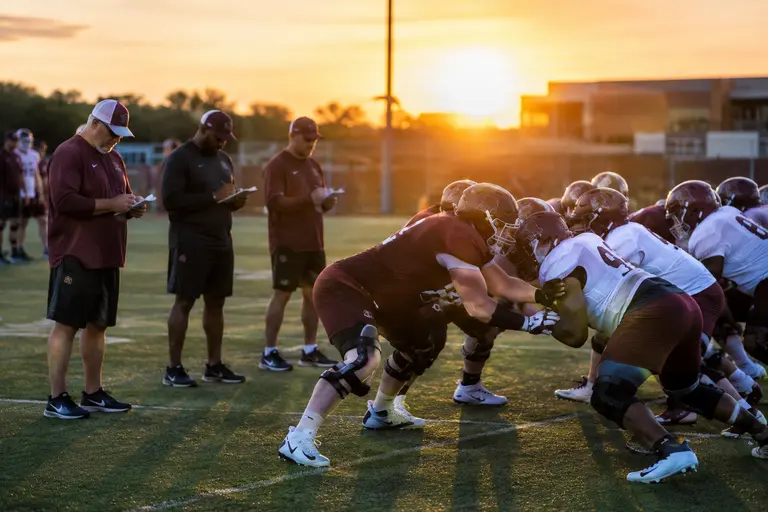
Recruiting local speed draws attention, but the 2026 class also showed a practical focus on the line of scrimmage. Research from the signing period identified Texas high school offensive linemen Eric Perkins of Marshall, Teagan Lindsey of Callisburg and Terrance Brown of Killeen among the players secured in that window. Those additions pointed to a staff trying to build a more stable foundation rather than relying only on skill-position momentum.
That approach fits the move into a tougher conference setting. Texas State’s Pac-12 entry gave the program a larger platform, but it also placed more pressure on depth, size and week-to-week physical development. Local offensive linemen often need time in a college weight program, and signing them out of high school allows the staff to shape technique and body development before they are forced into major roles.
The junior college portion of the class also mattered. With four junior college players included in the 19-man early signing group, the Bobcats balanced future development with more immediate roster needs. That blend is common for programs trying to rise quickly without losing sight of multi-year growth.
Recruiting Rankings Backed The Shift
The 2026 group was described by Yahoo Sports as the best class in program history by composite rankings at that time. That label is significant, but the more useful takeaway is how the class was assembled. The Bobcats did not simply chase national names without a regional plan. They paired a historic ranking marker with a high in-state share, giving the class both credibility and local identity.
Most of the class was built with three-star prospects, based on the recruiting profile in the research notes. That is not a weakness for a program such as Texas State. Three-star Texas players often arrive with strong competition backgrounds, especially when they come from programs used to deep playoff runs and high-level district play. The staff’s job is to find which of those players fit the scheme, respond to development and can handle the jump in preparation demands.
This is where the Bobcats’ pitch likely gained traction. A recruit could see a program with rising class rankings, a new league affiliation and a location that kept home support within reach. For many Texas families, that combination is practical as well as competitive.
What Texas State Recruiting Means For San Marcos
Community Ties Now Carry More Weight
The local effect of a Texas-heavy class is easy to overlook if recruiting is judged only by national ranking lists. Players from Kilgore, Marshall, Killeen and other Texas communities bring family networks, former coaches and high school teammates into the Bobcats’ orbit. That can show up in game-day attendance, social media attention and future recruiting conversations across the state.
San Marcos benefits when the roster feels connected to the wider Texas high school football map. A family traveling from East Texas or Central Texas for a home game is not just supporting one player. That family is also interacting with the campus, local restaurants, hotels and the game-day atmosphere around UFCU Stadium. Recruiting, in that sense, has a community impact beyond the practice field.
There is still uncertainty in any class. Signing a strong group does not guarantee production, and high school rankings do not decide who becomes a starter. The more grounded view is that Texas State gave itself a better player pool and a stronger local identity entering its new conference era.
Texas State recruiting in the 2026 cycle worked because the plan matched the program’s moment. The Bobcats had a new Pac-12 platform after July 1, 2026, a San Marcos location that kept families close, and a class structure that mixed skill talent, line depth and junior college support. For local fans, the key development was not just that the class ranked well. It was that the Bobcats made Texas players central to the next stage of the program.