

Texas State football nearly delivered one of the defining upsets of its 2026 season on October 31. Instead, the Bobcats left Albertsons Stadium in Boise, Idaho, with a 46–45 defeat against No. 20 Boise State, a result that somehow captured both the strength of their response and the cost of their late-game mistakes. Down 28–3 at halftime, Texas State scored 36 consecutive points after the break before the Broncos found an answer in the final minutes.
The score tells only part of the Texas State vs Boise State story. Quarterback Brad Jackson passed for 327 yards and four touchdowns, and the Bobcats turned a seemingly one-sided contest into a fourth-quarter lead. Yet the hosts regained control behind reserve quarterback Max Cutforth. A 72-yard touchdown to Zechariah Sample briefly put Texas State back ahead, but Boise State’s final scoring response proved decisive. The finish left head coach GJ Kinne’s team at 4–4 overall and 2–2 in Pac-12 play.
For fans following the Bobcats from across Texas, the game also prompted wider conversations about the state’s sports landscape. Readers exploring trusted offshore sportsbooks for Texas residents should distinguish independent reviews of offshore operators from state approval: Texas does not license those sportsbooks, and the linked guide explains the difference. The far more important story on the field was how Texas State transformed a 25-point deficit into a chance to beat a ranked opponent.
A First Half That Left Texas State With Little Margin
Boise State controlled the opening two quarters through long possessions and a balanced scoring approach. Maddux Madsen opened the scoring with a six-yard touchdown run in the first quarter. Dylan Riley followed with a five-yard rushing score early in the second, leaving the Bobcats behind 14–0. Texas State answered with Jacob Bonilla’s 31-yard field goal, but it could not turn that drive into a touchdown.
Madsen added a one-yard touchdown run before connecting with Rasean Jones on a 12-yard scoring pass with four seconds remaining in the half. That final strike pushed the Broncos’ advantage to 28–3. The sequence mattered because the Bobcats were no longer simply chasing one strong drive. They needed stops, big plays and near-perfect execution across the entire second half.
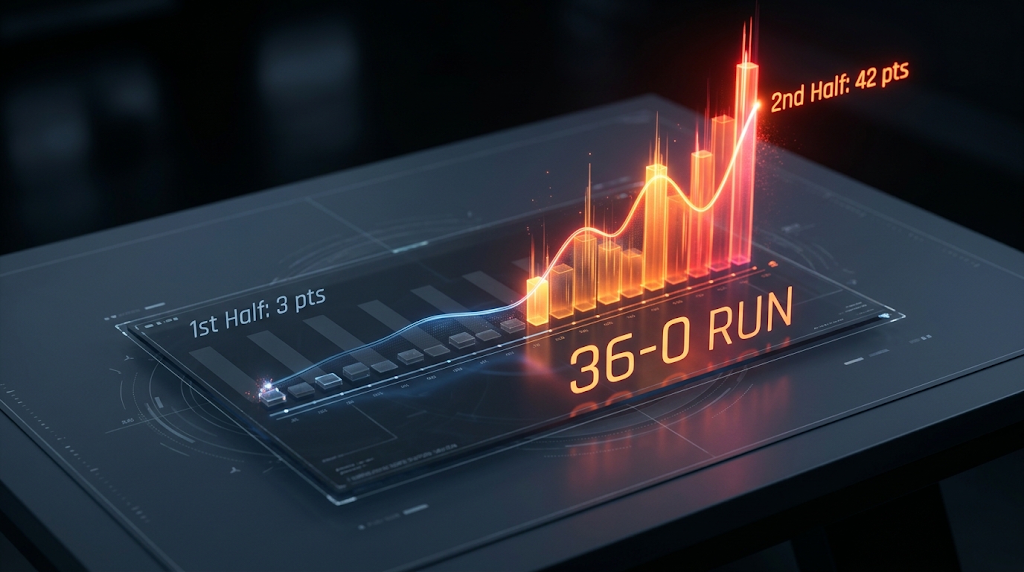
The official Texas State–Boise State box score records just three first-half Texas State points, followed by 22 in the third quarter and another 20 in the fourth. That distribution shows the game’s radical change in tempo. It also explains why a one-point loss can feel especially difficult: Texas State produced enough offense to erase an enormous hole, then could not protect the lead it had earned.
Brad Jackson Ignites A 36-Point Texas State Surge
The rally began with a play that immediately changed the field’s energy. With 9:21 left in the third quarter, Jackson found Chris Dawn Jr. for a 67-yard touchdown. The explosive pass reduced the margin to 28–10 and gave the Bobcats a way back into the contest. Texas State did not need to advance patiently in small increments; its passing game could change the score in a single snap.
Jackson then connected with Ty Stamey for a three-yard touchdown, and Beau Sparks converted the two-point attempt. At 28–18, the comeback became a genuine contest. Less than three minutes later, Jackson broke away for a 35-yard touchdown run. Bonilla’s kick made it 28–25, leaving Texas State within a field goal entering the late stages of the third period.
Early in the fourth quarter, Jackson found Sparks for a 44-yard touchdown and Texas State took its first lead, 32–28. A team that had appeared overwhelmed before halftime now had Boise State reacting to its pace and space. Jackson’s contribution was not limited to a passing total: he also rushed for 54 yards and a touchdown, giving the defense another threat to track when plays developed.
Then the Bobcats’ defense delivered an equally important turning point. Jayden Bradley intercepted Madsen and returned the ball 20 yards for a touchdown with 8:58 remaining. The pick-six created a 39–28 advantage and completed a staggering 36–0 run. Texas State’s official game recap identifies Bradley’s score as the high-water mark of the comeback. At that moment, the Bobcats had answered a terrible first half with touchdowns from their quarterback, receivers and defense.
Boise State Finds Its Answer In The Final Minutes
Boise State’s comeback began under challenging circumstances. Madsen exited during the fourth quarter after a hit near his left knee, and Cutforth entered at quarterback. Rather than retreat into conservative calls, the Broncos asked the backup to keep attacking. He threw three touchdown passes in the final seven minutes, turning Texas State’s commanding fourth-quarter run into another dramatic exchange of leads.
Cutforth first connected with Jones on a nine-yard touchdown to reduce the Bobcats’ advantage to 39–34 with 6:15 remaining. He found Jones again from 11 yards out at the 4:14 mark, moving Boise State ahead 40–39. Texas State had suddenly lost a lead that seemed comfortable only minutes earlier. The defense that had generated a touchdown could no longer keep Boise State out of the end zone.
The Bobcats still had their best offensive response waiting. Just 28 seconds after Boise State regained the lead, Jackson hit Sample for a 72-yard touchdown. Texas State jumped back in front, 45–40, with 3:46 remaining. It was the kind of immediate answer that made the second-half performance memorable even in defeat. Jackson had matched each shift in momentum with a decisive play.
But Cutforth led one more 75-yard touchdown drive. His 18-yard scoring pass to Akeem Wright with 2:40 left put Boise State ahead 46–45, and that proved to be the final score. The Bobcats’ last possession ended on an incomplete pass on fourth-and-three near their own 32-yard line. Boise State then moved the chains and ran out the clock. The Boise State official scoring summary documents the closing exchange, including the three late Cutforth touchdown passes.
What The Numbers Reveal About The One-Point Loss
Texas State’s scoring outburst deserves attention, but the full statistics show why the final outcome remained so tight. The Bobcats finished with 429 total yards, including Jackson’s 327 through the air, while Boise State accumulated 484. The Broncos also held a significant possession advantage, controlling the ball for approximately 37 minutes compared with roughly 23 for Texas State. That disparity put additional weight on the Bobcats’ ability to strike quickly.
Jackson’s top target by yardage was Sample, who finished with 89 receiving yards. Dawn Jr. contributed five catches for 71 yards and a touchdown. On defense, Michael Patterson III recorded 10 tackles and a forced fumble; Bradley added nine tackles to his interception-return touchdown. Those performances matter because the rally was not the product of one isolated offensive star. Several position groups contributed to the comeback.
| Game Measure | Texas State | Boise State |
|---|---|---|
| Final score | 45 | 46 |
| Halftime score | 3 | 28 |
| Total offense | 429 yards | 484 yards |
| Third-quarter points | 22 | 0 |
| Fourth-quarter points | 20 | 18 |
| Record after game | 4–4 (2–2 Pac-12) | 7–1 (4–0 Pac-12) |
The central tension is clear: Texas State had the explosive plays to overcome a large deficit, but Boise State sustained enough offense to reclaim the lead. A one-point margin can tempt observers to reduce the result to a single snap. In reality, the loss grew out of two different problems: the 25-point first-half hole and the inability to halt the Broncos’ late touchdown drives. Both deserve attention in the Bobcats’ film review.
What The Rally Means For GJ Kinne And The Bobcats
There is no moral victory in the standings. Texas State entered the night with a chance to defeat a nationally ranked opponent and departed with a loss. Still, the comeback offered evidence that Jackson and the passing attack can operate under severe pressure. The offense found scoring plays of 67, 44 and 72 yards, and it did so while the opponent held a lead that often causes teams to abandon their broader game plan.
The result also adds useful perspective to Texas State’s developing offensive identity. Earlier in the season, Torrance Burgess Jr. supplied a powerful rushing foundation, including the performance detailed in our profile of Burgess and the Bobcats’ run game. Against Boise State, Burgess rushed for 33 yards on 11 attempts, while Jackson’s arm and mobility became the more important drivers of the comeback. That contrast illustrates how Texas State may need multiple ways to create explosive offense against conference opponents.
At the same time, the closing minutes highlight an unavoidable defensive challenge. After Bradley’s touchdown, the Broncos scored on three consecutive touchdown passes by Cutforth. Texas State had taken control by forcing a turnover and hitting big plays, but it could not close the game by preventing drives of its own. Converting a spectacular rally into a ranked road victory demands more than the ability to regain the lead.
The immediate next step was a scheduled road meeting with Oregon State on Saturday, November 7, with Texas State’s official postgame notes listing a 9:30 p.m. Central kickoff. That matchup gives Kinne’s staff a direct opportunity to test whether the explosive second-half offense can become more consistent from the opening drive. It also raises a clear defensive priority: make opposing quarterbacks earn scores through sustained execution instead of allowing late possessions to turn quickly into touchdowns.
A Defeat That Still Sets A Standard For The Next Road Test
Texas State’s 46–45 loss to Boise State will remain painful because the Bobcats did nearly everything required to flip a 25-point halftime deficit. They scored 36 unanswered points, produced a defensive touchdown and took multiple late leads. Jackson delivered five total touchdowns, and the visiting offense did not surrender when the early scoreboard offered few reasons for optimism.
But the game also established a demanding standard. Against ranked competition, the Bobcats cannot count on another historic comeback, nor can they expect an opponent to stop scoring simply because momentum has changed. The lesson from Boise is not that Texas State lacks the talent to compete. It is that sustaining that level across four quarters—and closing the final defensive series—remains the difference between a stirring performance and the road win that got away.