
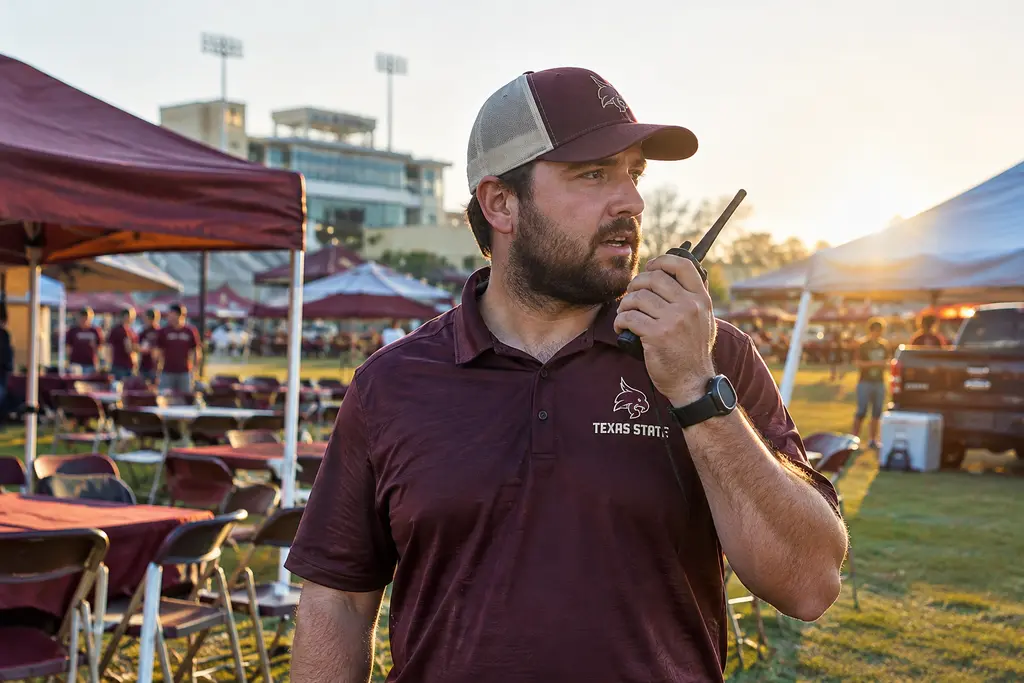

Texas State logistics were a central part of the Bobcats’ Homecoming game against Utah State on October 24, 2026, at UFCU Stadium in San Marcos. The matchup has already been played, so the more useful read now is not a pregame checklist. It is a local sports review of how the university’s fan flow, tailgate structure, parking timing and communications setup supported one of the most visible home dates on the 2026 football calendar.
Texas State Logistics Set The Homecoming Framework
The Utah State game carried more than a conference matchup label. It was Texas State’s Homecoming date, paired with a “Wear Throwback Colors” theme in the research notes, and that meant the operation around the stadium had to serve students, alumni, families, visiting fans and regular season-ticket holders at the same time.
For a football program trying to build a stronger home-field identity in San Marcos, those details matter. A Homecoming crowd does not move like a standard Saturday crowd. More people arrive early, more groups gather before kickoff, and more casual attendees need clear direction on where to park, when to enter and how to move around the stadium footprint.
Texas State Logistics Started Before Kickoff
The official university parking guidance states that football parking lots open six hours before kickoff, while shuttles begin three hours before kickoff and security screening begins before stadium entry windows tighten closer to game time through the school’s game-day parking guidance. That timeline was especially important for the October 24 Homecoming date because early-arriving fans were not just filling spaces; they were also feeding the tailgate areas and pregame gathering points around UFCU Stadium.
From a team-strategy angle, a settled pregame environment helps more than it gets credit for. The players and staff need a predictable stadium rhythm around bus arrivals, warmups, locker-room access and crowd build. When traffic backups stretch too close to kickoff, the energy can arrive late. When fans are in place early, the home sideline feels that support before the first series.
Why The Homecoming Crowd Changed The Assignment
Homecoming crowds include plenty of people who may attend one Texas State football game a year. That makes wayfinding and timing part of the fan engagement plan, not just a transportation issue. If alumni families can find lots, shuttles and entry gates without confusion, they are more likely to spend time in the stadium district instead of rushing in at kickoff.
The Utah State game also came with the added layer of visiting support. Research notes list visiting fans in Section 223 on the east side unless otherwise specified, which fits the broader need to separate visiting-team access, fan seating and Texas State’s main student and alumni energy zones. For the Bobcats, that separation helps keep the home atmosphere concentrated rather than scattered.
Fan Engagement Around UFCU Stadium Had A Clear Purpose
Boko’s Backyard was a key piece of the fan engagement strategy tied to the Utah State Homecoming game. The research notes describe it as the official fan tailgate zone with reserved tailgate spaces or packages, entertainment, food trucks, kids’ activities and early-entry pregame features. That matters because Texas State is trying to keep more of the game-day experience on campus instead of sending fans to disconnected gathering spots around San Marcos.
Good fan engagement is not just noise. It shapes who comes back. Families need activity space. Students need a reason to arrive before kickoff. Alumni need a place to reconnect with the university before taking seats. Local businesses and food vendors benefit when game day keeps people close to the stadium for several hours rather than only during the game window.
Boko’s Backyard Supported More Than Tailgating
The best college football environments create a rhythm that starts well before the first snap. Boko’s Backyard gave Texas State a structured gathering point, which is valuable for a Homecoming crowd that likely included a mix of regular attendees and returning alumni. A planned tailgate zone also helps the operations staff guide traffic patterns because fans have a known destination rather than spreading unevenly across campus.
There is also a recruiting and player-development layer here. Prospects, families and younger local athletes notice the atmosphere around a program. They see whether the school treats football as a full campus event or a three-hour stadium appointment. For Texas State, making Homecoming feel organized and connected can support the wider perception of the program, even though the actual player development still happens in practice, film work and strength training.
Throwback Colors Added Identity Without Forcing The Moment
The “Wear Throwback Colors” theme gave the Utah State date a local identity cue. Promotions can feel thin if they are disconnected from the sport, but Homecoming is one of the few dates where tradition and game-day presentation naturally fit. The key is making the theme support the football environment rather than distract from it.
In San Marcos, that means tying the theme to the student section, alumni participation and pregame visuals while still keeping the focus on what happens between the lines. A strong theme gives the crowd a shared look. A strong team gives that crowd a reason to stay loud through the fourth quarter.
Parking, Shuttles And Exit Flow Shaped The Fan Experience
Texas State logistics are often judged most harshly after the game, when thousands of people are trying to leave the same area at once. The official parking guidance says postgame traffic shifts to outbound-only patterns on major roads, with police holding vehicles at points to allow pedestrian waves, and shuttle service ending one hour after the game. That plan matters because the fan experience does not end at the final whistle.
For a Homecoming matchup, the exit pattern can be even more sensitive. Alumni groups may linger, families may need more time to reach vehicles, and visiting fans may be less familiar with San Marcos traffic patterns. Clear postgame traffic control reduces frustration and can shape whether a casual attendee views the night as worth repeating.
The shuttle timing also affects how fans make decisions before the game. If supporters know shuttles begin three hours before kickoff and end one hour after the game, they can plan around a defined window. That clarity is good for crowd flow because it spreads arrivals across the afternoon and early evening instead of compressing movement near kickoff.
For more pregame context from that week, our earlier Texas State Homecoming guide framed the Utah State date as both a football event and a campus planning exercise. The postgame view confirms that those two pieces were tied together from the start.
Media Access And Communications Kept The Event Structured
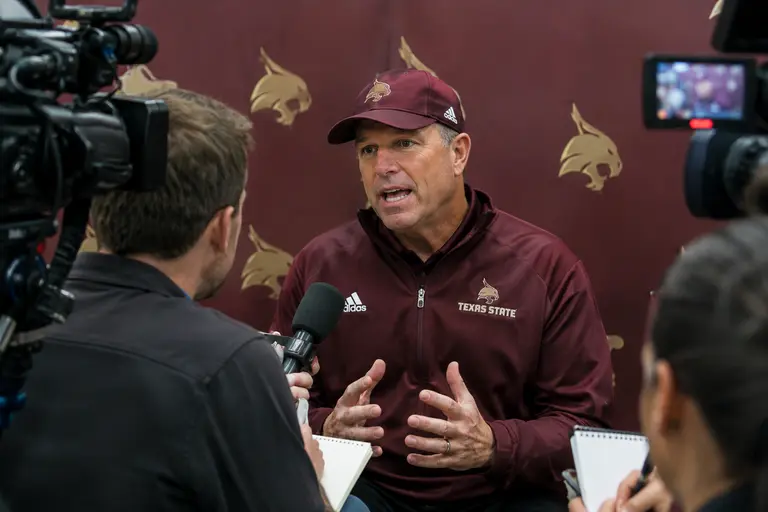
Media operations are not as visible as parking lots or tailgate tents, but they help shape how a Homecoming game is covered and remembered. Texas State policy places Athletics Communications at the center of media access, with interviews coordinated through the office and no telephone interviews on game days under the university’s athletics communications policy.
That setup protects players and coaches from scattered requests on a crowded game day. It also gives local reporters a defined process, which is vital during Homecoming because coverage may include football, alumni events, crowd scenes and broader university activity. A clear media structure keeps the football story from being lost in event traffic.
Why Communications Matter For Player Development Stories
As someone who spends a lot of time watching depth charts and team-building patterns, I see communications policy as part of the larger player environment. Young players benefit when public attention is organized. Coaches can control availability. Athletes can focus on preparation, recovery and meetings instead of trying to manage media access themselves.
That matters most during weeks with extra attention. Homecoming can pull more eyes toward the program, including alumni, local media and visiting outlets. Texas State’s communications structure gave the staff a way to keep access professional while still allowing the game to be covered.
Depth-chart development is rarely shaped by one Saturday, but the environment around a player can help or hurt. A clean operational week allows backups, special teams contributors and younger rotation players to stay locked into assignments. That is part of how a program moves from having talent to building dependable depth.
What Utah State Homecoming Showed About San Marcos Game Day
Texas State logistics around the Utah State Homecoming game showed how much work goes into making UFCU Stadium feel like a true local football hub. The date combined a themed crowd, an official tailgate zone, defined parking windows, shuttle planning, postgame traffic control and structured media access. None of those pieces wins a game by itself, but each one shapes the conditions around the team and the community.
The strongest takeaway is that Homecoming should be treated as a full-campus football operation, not a single promotion attached to a kickoff time. When San Marcos has clear arrival patterns, active pregame areas and a crowd that understands where to go, the Bobcats get a better home setting. That affects noise, recruiting impressions, alumni connection and the week-to-week habit of attending games at UFCU Stadium.
For Texas State, the Utah State date was also a reminder that fan engagement and football growth are linked. A program’s depth chart develops in meeting rooms and practices, but the players perform inside an environment built by students, alumni, local families and staff members working the event. The more consistent that environment becomes, the more UFCU Stadium can feel like a competitive asset rather than just a venue.