


Amarion Atwood has become one of the more practical player-development stories around Texas State’s defense because his rise is tied to verified production, not empty offseason talk. Texas State lists the Dallas defensive back as a 6-foot-1, 182-pound redshirt junior who enrolled in the summer of 2023 after joining the early signing class in December 2022, according to his official Texas State roster bio. For San Marcos fans tracking the cornerback room, that profile matters: length, track speed and a nine-game 2025 sample now give the Bobcats a real player-development case to study.
Why Amarion Atwood Fits Texas State’s Corner Plan
Amarion Atwood And The First-Team Question
The first-team label around a cornerback should always be handled with care unless it is tied to an official release from the program. The school profile confirms Atwood’s class standing, frame, background and 2025 production. It does not need hype to make the case that he belongs in the main rotation conversation.
Texas State’s secondary needs corners who can survive isolated matchups, tackle in space and handle quick changes after motion or bunch looks. Atwood’s verified profile gives the staff useful traits for that assignment. A 6-foot-1 corner with sprint background and prior ball production gives the defense a longer option outside, especially in a league environment where receiver depth and tempo can stress every corner on the travel roster.
For a local fan base that studies depth charts closely, the real question is not whether a label sounds exciting. It is whether the player’s record supports more snaps. In Atwood’s case, the answer starts with his 2025 game count and grows from there.
Size, Speed And Cornerback Usage
Atwood’s build gives Texas State a useful developmental template. He is not listed as an undersized slot-only defensive back. His height and weight point toward a corner who can be asked to challenge the catch point, stay connected on vertical routes and contribute against perimeter run actions.
The speed piece is also documented. In April 2023, he posted a personal best of 11.07 seconds in the 100-meter dash and also competed in the 200 meters and 4×100 relay. Track results do not automatically make a complete corner, but they help explain why Texas State would keep investing practice reps in his development. Closing speed can turn a late break into a pass breakup. Recovery speed can keep a missed jam from becoming an explosive play.
Dallas Development Shows Up In His Profile
Mesquite Horn Production
Amarion Atwood arrived from Mesquite Horn with a high school résumé that fits what college staffs often want from a developmental defensive back: tackling volume, ball production and repeat recognition from district coaches. Across 25 high school games, he totaled 74 tackles, including 56 solo stops, with five interceptions and two fumble recoveries. He was named First Team All-District at cornerback in both 2021 and 2022.
The year-by-year split matters because it shows more than one productive stretch. As a junior in 2021, he posted 32 tackles, 26 solo tackles and three interceptions. As a senior in 2022, he recorded 30 tackles, 21 solo tackles and two interceptions while playing cornerback. That is the kind of foundation that lets a college staff build from real defensive instincts rather than only raw measurables.
Why Those Numbers Matter In San Marcos
Texas State’s local identity has always benefited when Dallas-area players grow into visible roles in San Marcos. Atwood brings a North Texas recruiting connection into a Bobcats defense that needs home-state development to keep the roster deep. Portal additions draw attention, but high school signees who mature into rotation players often decide whether a defense can hold up through injuries, travel and special-teams demands.
That is why Atwood’s profile connects with the bigger roster conversation. Texas State has been building toward stronger week-to-week competition, and player growth in the secondary is part of that. Our recent local piece on Texas State coaching changes framed how new defensive voices can affect development across the roster. A corner such as Atwood gives that staff a player whose traits are already visible, with technical growth now becoming the separator.
How The 2025 Snaps Shape The Depth Chart
Production Without Interceptions
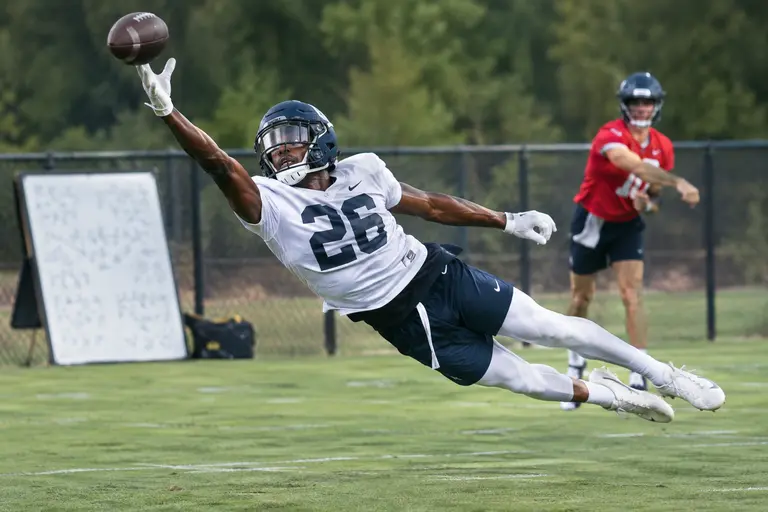
The 2025 season gave Texas State a usable sample. Atwood appeared in nine games and finished with 30 tackles, 20 solo tackles, 10 assists, 1.5 tackles for loss, three pass breakups and two quarterback hurries. He did not record an interception, but that does not erase the value of his activity.
For Amarion Atwood, that stat line suggests a corner who was involved in the run fit, near the ball often enough to break up throws and trusted enough to be part of pressure or pursuit situations. Interceptions carry more attention, but pass breakups and solo tackles can be just as telling for a player trying to prove he can handle first-team snaps. Coaches need corners who finish plays even when the ball does not land in their hands.
Marshall Game As A Teaching Point
His clearest 2025 snapshot came against Marshall on October 15, 2025, when he recorded nine total tackles, five solo tackles, one pass breakup and one tackle for loss, per Redshirt Analytics. That kind of game is useful for evaluation because it shows volume, not just a single highlight.
A nine-tackle performance from a corner can mean several different things. It may show that opponents completed throws in his area. It may show that he was active in support. It may reflect formation, game flow or assignment. Without full coaching tape, sweeping conclusions would be unfair. What can be said is that he was involved, and involvement creates teachable film. For a developing corner, that matters as much as a box-score splash.
The local angle is simple: if Atwood keeps turning those reps into cleaner technique, Texas State gains a corner who has already handled game pressure. That helps the staff manage the rotation and gives Bobcat fans a player worth tracking beyond the top-line starters.
What Amarion Atwood Means For Texas State
A Depth Piece With Starter Traits
Amarion Atwood matters because he sits at the intersection of recruiting, development and depth-chart pressure. He has the Dallas background, the high school ball production, the track marker and the 2025 defensive workload. That does not guarantee a full-time starting role, and it should not be framed as a finished product. It does make him one of the more logical players to watch as Texas State sorts out its cornerback responsibilities.
The next step is consistency. Corners are judged harshly because mistakes are public. A missed tackle near the sideline, a slow turn on a vertical route or a late hand at the catch point can all swing a drive. Atwood’s challenge is to turn his traits into down-by-down reliability. If he does that, Texas State gets more than another name on the two-deep. It gets a corner who can help stabilize the defense while still carrying room to grow.
Why San Marcos Should Track His Growth
For Bobcat fans, player profiles like this are part of following the program closely. Not every key development comes from a headline transfer or a postgame star. Sometimes it comes from a redshirt junior who has stacked enough verified work to push for a larger role.
If Amarion Atwood keeps building on his 2025 production, Texas State’s cornerback room becomes more flexible. That can affect special teams, nickel packages, travel depth and how aggressively the defense can match receivers outside. In San Marcos, those details are not background noise. They are the difference between a defense surviving a long schedule and one that can keep improving as young players become trusted contributors.