
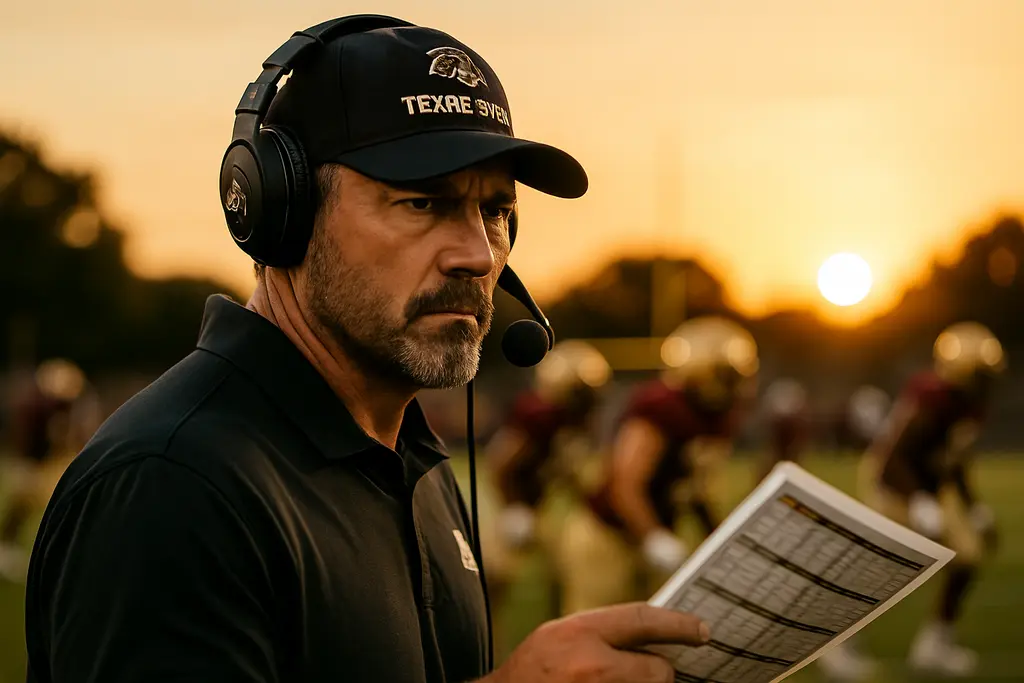

Texas State coaching took a clear defensive turn on January 21, 2026, when the program hired Will Windham as defensive coordinator, Marcus Patton as secondary coach and Chris Gistorb as defensive line coach, according to the school’s staff announcement. For San Marcos, that move was not just about new titles on a staff directory. It changed who was teaching the front, who was shaping the back end and how young defenders would be developed through daily position work.
The timing mattered. Texas State entered the 2026 season with a roster trying to match rising expectations, and staff changes can show up fastest in two places: technique and rotation trust. A new defensive coordinator sets structure. A secondary coach affects communication, leverage and ball skills. A defensive line coach influences hand use, pad level and how many players can be trusted to hold up across long drives.
Why Texas State Coaching Changed The Defensive Plan
Texas State Coaching And The Staff Fit
Texas State coaching changes started with Windham, whose most recent defensive work before San Marcos came at South Alabama in 2025. Under his leadership, South Alabama finished second in Sun Belt rushing defense at 142.8 yards allowed per game, ranked fourth in total defense and passing yards allowed, and led the conference with 16 interceptions, per the same Texas State release on the football hires. Those details explain why the hire carried weight beyond a normal offseason staff shuffle.
For Texas State, the most relevant part of that résumé is balance. A defense that limits the run but also creates interceptions gives a head coach more room to manage game flow. It can keep the offense from needing to chase every possession, and it can create shorter fields for a roster built around production. That does not mean those South Alabama results automatically followed Windham to San Marcos. It does mean Texas State hired a coordinator with recent evidence in the exact areas that can shift a depth chart: run fits, coverage discipline and takeaway chances.
What Patton And Gistorb Add To Development
Patton arrived as the secondary coach after serving as Sacramento State’s defensive coordinator in 2025. The research record supplied for this story shows that Sacramento State led the Big Sky in tackles for loss and sacks, produced 12 interceptions, forced five fumbles and improved its defensive scoring average by 8.5 points per game from 2024. That background points to an aggressive teaching profile, especially for defensive backs asked to do more than survive on the perimeter.
Gistorb came to Texas State after coaching at McNeese during the 2025 season, where he worked with first-team All-Southland Conference defensive lineman Phillip Bradford. His résumé also includes time at Northwestern State in 2023-24, where he mentored Phil Steele Freshman All-American Chancellor Owens, who joined Texas State in January 2026. For a local fan base tracking the Bobcats past the headline names, that connection matters. Defensive line growth is often quieter than quarterback play, but it can decide whether a defense gets off the field or lets a drive bleed into the next media timeout.
How Texas State Coaching Shows Up In Player Profiles
Tymere Jackson Gives The Front A Reference Point
Through Texas State’s first six games of 2026, defensive lineman Tymere Jackson had recorded 18 tackles, 3.5 tackles for loss, 2.5 sacks, one quarterback hurry and one forced fumble, based on the research provided. Those numbers should be read carefully. They do not prove a single coach created that production. Football development is shared work among the player, position coach, coordinator, strength staff and weekly opponent plan.
Still, Jackson gives San Marcos a useful reference point for judging how the new defensive front is taking shape. Tackles for loss and sacks are not just box-score decorations. They reflect first-step timing, hand strength, block recognition and the confidence to finish in space. A defensive lineman who can disrupt the backfield changes how opponents call plays, even when he is not making the tackle himself.
That is where Gistorb’s room bears watching. If Jackson’s first six-game production becomes part of a deeper rotation rather than a single-player spike, Texas State can protect legs late in games and avoid overusing its best front-line defenders. Depth-chart strength is not only about who starts. It is about whether the second wave can keep the same standard.
The Offensive Stars Still Frame The Team Story
The staff changes were defensive, but Texas State’s player-profile picture through six games of 2026 still included major offensive production. Running back Torrance Burgess Jr. had rushed for 838 yards and five touchdowns through the first six games, averaging 139.7 yards per game and 7.8 yards per carry, according to the research provided. Offensive lineman William Boone had helped anchor a unit tied to team averages of 562.3 total yards per game and 303.5 rushing yards per game over that same span. Wide receiver Chris Dawn Jr. had 29 catches for 348 yards and four touchdowns through the first six games after posting 65 receptions, 1,007 yards and four touchdowns in 2025.
Those numbers matter in a coaching-staff discussion because they shape what the defense is asked to do. A productive offense can give a defense rest, field position and scoreboard support. A defense that improves in early downs can give the offense more possessions. The two sides are connected, even when the January hires were concentrated on defense.
For readers tracking roster movement and development from week to week, our related breakdown of how Texas State coaching sets development tone fits the same bigger question: can the Bobcats turn staff changes into better player growth across the whole depth chart?
The San Marcos Impact Beyond The Staff Directory
Why Local Fans Should Care About Position Coaching
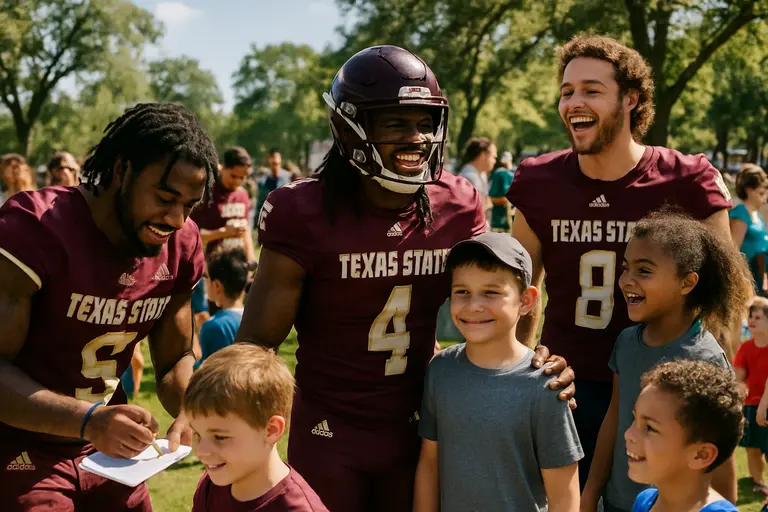
Position coaches can feel distant from the Saturday conversation, but they are often the people who shape what fans see at the most basic level. Does a defensive back find the ball instead of drawing a flag? Does a young lineman keep outside contain? Does a substitute communicate before the snap when the crowd gets loud? Those details are built at practice long before they show up in a box score.
In San Marcos, that matters because Texas State is not simply collecting new assistants. The program is trying to turn individual profiles into reliable units. Windham’s coordinator role sets the language. Patton’s secondary room has to carry that language to the back end. Gistorb’s defensive line group has to make it work in the most physical part of the field. If those rooms develop at the same pace, the staff change becomes visible without needing a speech or slogan.
Depth Chart Trust Is The Real Measurement
For a coach, trust is the hidden depth-chart statistic. A player can have size, speed and high school credentials, but he does not earn key snaps unless the staff trusts his assignment discipline. That is why the recent hires are so tied to player foundations. Texas State needs defenders who can handle technique, communication and situational football when games tighten.
The early player data offers partial evidence, not a full verdict. Jackson’s front-line production gives the defensive staff a tangible early sign. The offense’s first six-game numbers show the team has enough scoring and yardage support to let the defense grow without carrying every possession alone. The next step is consistency: fewer breakdowns, more usable defensive linemen, cleaner secondary spacing and steadier late-game tackling.
What Texas State Coaching Means For Player Growth
Texas State coaching is now tied directly to how the Bobcats build profiles from the inside out. Windham, Patton and Gistorb were hired on January 21, 2026, to reshape the defensive side, and their impact should be judged by player development as much as by scheme labels. In San Marcos, that means tracking how defenders improve from one assignment to the next, how young players move into rotation roles and how the offense and defense support each other over a full schedule.
The most useful takeaway for the Texas State community is simple: staff changes become real only when players show growth. Through the first six games of 2026, the Bobcats had offensive production strong enough to frame the team identity and at least one defensive front data point in Jackson that fits the development story. The hires did not create a finished product on January 21. They created a new teaching structure. The rest is being measured snap by snap, in the position rooms, on the practice field and on game days that matter to San Marcos.