


Texas State Fans got a clear look at how the Bobcats are trying to turn a conference move into a stronger local sports bond. On September 11, 2026, Texas State’s fourth annual Back the Bobcats block party brought the program’s Pac-12 moment onto North Street in San Marcos, using music, spirit groups, vendors and family activities as a bridge between campus and the city. One day later, the football program’s home environment moved back toward UFCU Stadium, where larger crowds and a wider league profile have made game-day operations part of the community story, too.
How Texas State Fans Gathered On North Street
What Texas State Fans Saw At The Block Party
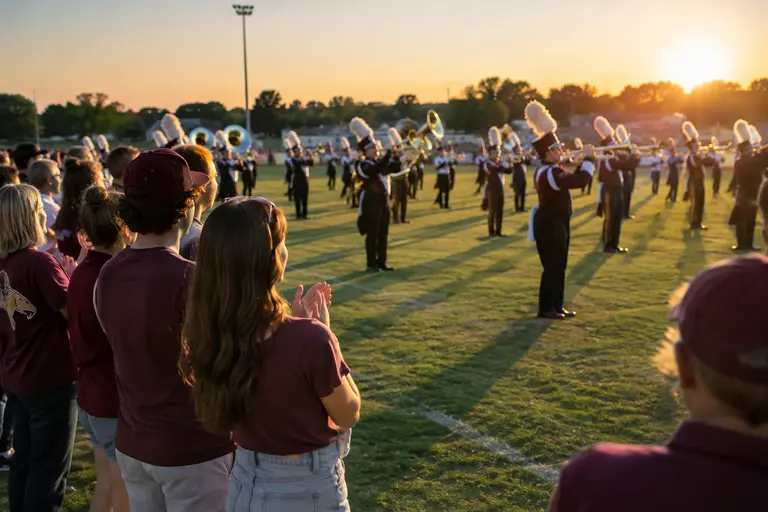
The September 11 block party gave the school a public stage before the Bobcats’ September 12 football date with UTSA. Texas State announced the event as a free public gathering on North Street near Zelicks Icehouse, running from 5:30 p.m. to 10:00 p.m., with a 7:00 p.m. spirit rally featuring cheerleaders, the marching band and mascots, plus more than 20 vendors, local bands, games and prizes, according to the university announcement.
That detail matters in San Marcos because it placed the football week outside the stadium gates. A block party on North Street invited students, alumni, families, nearby businesses and longtime local supporters into the same setting. The football team may have been the spark, but the format made room for people who connect with the Bobcats in different ways: through the band, through student groups, through downtown routines or through family-friendly campus traditions.
The fourth annual label also gave the event continuity. It was not a one-off response to the Pac-12 move. The conference shift gave the gathering extra meaning, but the event already had a place in the local sports calendar. For a program trying to grow without losing its San Marcos identity, that balance is important. The Bobcats need broader recognition, yet their strongest energy still starts with people close enough to walk, carpool, volunteer, play in the band, work nearby or bring children to an early-evening rally.
Why A Public Rally Fits The Pac-12 Moment
Texas State’s move into a bigger competitive setting can sound like an administrative story: new opponents, new travel demands, new media attention and new expectations. The block party turned that change into something more personal. It gave people a shared place to mark the moment before kickoff pressure took over.
That matters because Texas State Fans did not need a box score to participate. A marching band performance, mascots, local bands and vendor rows all serve a different purpose than a third-down stop or a red-zone finish. They tell families and casual supporters that the program wants them inside the larger circle. In college sports, that circle often decides whether a bigger league identity feels local or distant.
The best community sports events create low-pressure entry points. A family that has not made football part of its routine can still stop by a free event. A student who has not followed roster moves can still join a spirit rally. A local business can still feel the rhythm of game week even without being inside UFCU Stadium. Those connections do not replace wins, coaching, roster depth or player development. They support the environment those things need.
Game-Day Operations Became Part Of The Fan Story
County Staffing Shows A Larger Home-Game Footprint
As Texas State’s profile rose with the Pac-12 move, Hays County and the university also faced a practical question: how to support bigger game-day crowds safely and smoothly. For 2026 home football games, Hays County approved 60 to 80 extra law enforcement personnel per game, including deputies and corrections officers, under a county-Texas State agreement aimed at crowd control, access safety and event operations, according to a Yahoo Sports report.
That staffing decision belongs in the sports conversation because fan experience is not only what happens after kickoff. It begins with arrival, parking movement, walkway flow, stadium entry and the confidence families feel when they bring children into a crowded setting. For students, alumni and visiting supporters, those details shape how a major home date feels long before the first series.
There is also a community trust piece. When a university program grows, the surrounding city feels the effects. Streets get busier. Local businesses see different traffic patterns. Families plan around kickoff windows. Extra staffing does not guarantee a perfect day, but it shows the Bobcats’ Pac-12 era is being treated as a shared local operation rather than only an athletic department milestone.
Access And Atmosphere Have To Grow Together
The strongest game-day cultures make access feel organized while still protecting the emotion that makes college football special. Too much friction can wear down enthusiasm. Too little preparation can create stress for families, workers, students and first responders. Texas State’s challenge is to grow the crowd without making the experience feel detached from San Marcos.
That is why the county staffing agreement and the block party belong in the same conversation. One speaks to celebration; the other speaks to preparation. Together, they show a program trying to widen its reach without ignoring the local systems that help fans gather safely. For a community sports site, that connection is central: the game is the headline, but the neighborhood around the game carries part of the load.
Why Local Sports Identity Still Leads The Push
San Marcos Gives The Bobcats Their Base
The Pac-12 label changes the scale of Texas State football, but San Marcos remains the base. A free North Street event, local vendors, school spirit groups and county-level game-day planning all point toward the same idea: the Bobcats’ next chapter has to feel rooted before it can feel bigger.
For readers who follow how campus efforts are tying athletics to the city, our recent look at Texas State community events connects this same theme across the Bobcats’ wider fan-building push.
That local identity also helps student-athletes. Players run onto the field with more behind them than a schedule. They see the band, the student section, alumni groups, families, volunteers and youth fans who may one day see Texas State as their first college sports home. The university’s community events do not produce tackles or touchdowns, but they help create the setting where those moments carry more weight.
Community Energy Can Support Competitive Standards
A growing fan base does not replace football execution. Texas State still needs clean special teams, sound tackling, offensive timing and coaching adjustments. Yet community energy can support those standards by making home games feel important. When players walk into a fuller, louder, better-prepared environment, the program’s ambitions become easier to see and harder to ignore.
The September 11 block party was especially useful because it happened before the emotional rush of the UTSA game. Rivalry weeks can narrow attention to the opponent. A public rally widens it back out. It reminds everyone that the Bobcats are not only representing a sideline. They are carrying a campus, a city and a growing regional sports audience into a new league chapter.
Why Texas State Fans Matter In The Pac-12 Era
The Next Step Is Keeping The Circle Open
Texas State Fans are being asked to grow with the program. That does not mean losing the familiar pieces that made Bobcat game weeks feel local. It means giving those pieces a larger stage: North Street gatherings, stadium operations, spirit rallies, family access, local vendors and a stronger connection between campus life and Saturday football.
The most meaningful development from September was not one single event feature. It was the pattern. Texas State used a public block party to bring people together, while Hays County and the university prepared for the heavier operational demands around home games. Celebration and planning worked side by side.
That is how a conference move becomes more than a logo change. It becomes a local sports project. If Texas State can keep pairing bigger football opportunities with accessible community touchpoints, the Bobcats will give San Marcos more than a new schedule to discuss. They will give the city more reasons to gather, more ways to feel included and more shared memories around a team entering a higher-profile era.