
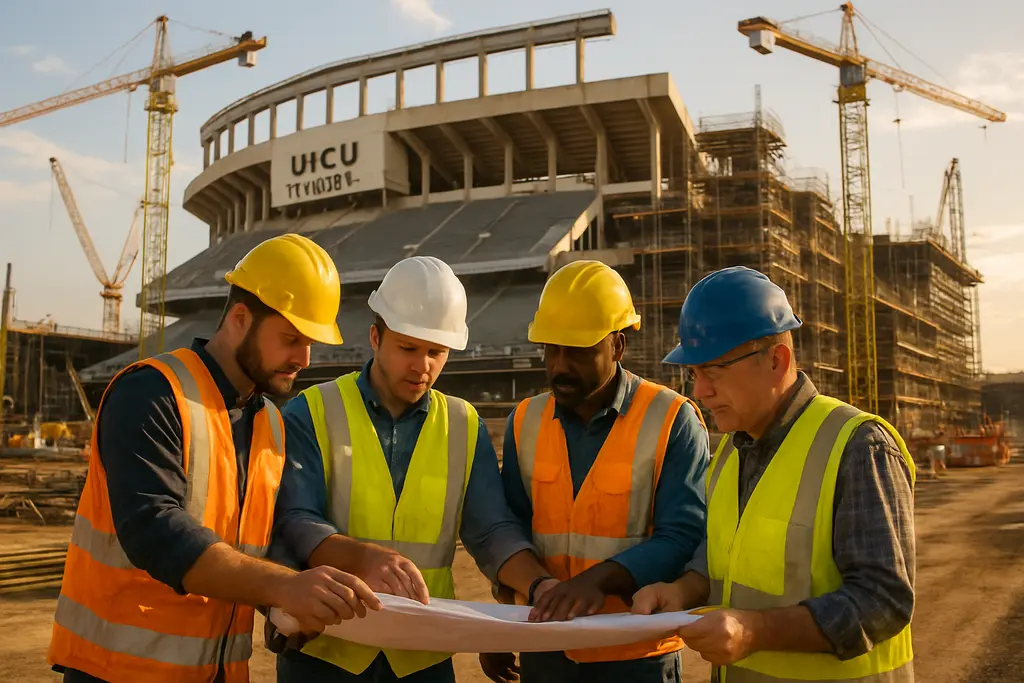

Texas State construction has moved from campus planning language into the way Bobcat fans experience game day. At UFCU Stadium, the completed South End Zone work already changed how the football building frames premium seating, concourse movement and the south side of the venue. At Bobcat Ballpark and the softball complex, Phase I work that runs from October 2026 through June 2027 points toward a stronger training base for athletes and a different daily rhythm around baseball and softball events.
Texas State Construction At UFCU Stadium
For football, the clearest completed facility marker is the South End Zone project tied to the Weisman Center work. Texas State’s May 2025 board materials identified the South End Zone Complex within a $37 million renovation that the research record lists as completed on July 25, 2025 Texas State University System board materials. That matters because game day at UFCU Stadium is not only about the seat a fan holds. It is also about how people enter the building, where they gather, how premium areas are served and how the venue feels before kickoff.
The south end of a football stadium can do more than close off a bowl. It can shape sound, give fans a defined meeting point and create a stronger backdrop for players taking the field. The research notes describe the wider football performance center expansion as including training, locker room, meeting and hospitality spaces, but the publicly cited board material available for this article most directly supports the South End Zone renovation and its cost. That distinction matters. Texas State supporters deserve clear separation between confirmed project records and broader facility descriptions that have appeared in athletics communications.
Texas State Construction And Football Flow
Texas State construction at UFCU Stadium changes the fan experience first through movement. Premium and hospitality spaces can pull some traffic away from general concourses, while improved gathering areas can reduce the sense that every fan is trying to use the same corridor at the same time. That does not mean every line disappears or every bottleneck is solved. Public documents cited here do not provide gate-by-gate wait times, restroom counts or concession throughput data. They do, however, confirm a major investment in the south end of the stadium, and that kind of work changes the way a football venue operates on crowded Saturdays.
For the Bobcats, the player side is tied closely to the public side. Better football support areas can sharpen pregame routines, halftime organization and postgame recovery. Fans may not see those spaces directly, but they see the results in how smoothly a team moves through game-day windows. In a local college setting, that connection is easy to miss. A stadium project is not just a new backdrop for photos; it becomes part of the weekly work pattern for athletes, coaches, equipment staff, trainers, media crews and event workers.
How Premium Spaces Change The Bobcat Crowd
Premium areas often get discussed as a revenue story, but in San Marcos they also affect the makeup of the crowd. Alumni, donors, families, local business groups and visiting guests use those spaces differently from students packed into high-energy sections. A stronger hospitality setup can keep longtime supporters closer to the program while preserving the student-driven feel that gives college football its edge.
That balance will be important for Texas State Athletics. If premium seating grows without cutting into the sound and pace of the student sections, UFCU Stadium can feel larger and more organized without losing its local identity. If the building becomes too segmented, the atmosphere can feel divided. The best outcome is a stadium where the south end adds comfort and choice while the core game-day noise still comes from the broader Bobcat crowd.
Why This Matters For Families And Local Fans
Families often judge a game day by the parts that do not appear in a box score. Can children move safely through concourses? Are there clear places to meet before kickoff? Can older fans find a comfortable area without feeling removed from the game? Construction updates influence those answers. The research record does not give a full public operations plan for every football Saturday after the South End Zone project, so it would be unfair to claim exact parking or entry changes from the renovation alone. What can be said is that facility design affects crowd habits, and major stadium work changes how fans use the building.
For San Marcos, those habits spill beyond campus. Earlier arrivals, longer stays and premium hospitality use can affect nearby restaurants, hotels and traffic patterns. That is where athletics facilities become a community story. A football renovation is not isolated from the town around it. It shapes how people plan their afternoon, where they gather after the game and how often they bring friends back for another home date. For a related local view of how facility projects connect to fans, our coverage of Texas State facilities and fan engagement tracks the same campus-to-community thread.
Ballpark Improvements Bring Training Into View
The next major piece in the supported public record sits at the baseball and softball complex. Texas State’s facilities page lists Ballpark Improvements Phase I with a $4.5 million budget and a construction schedule from October 2026 through June 2027, including new batting cages and a pitching lab for baseball and softball Ballpark Improvements Phase I. As of October 22, 2026, that schedule places the project in its construction window rather than in a future planning stage.
That timing is important. Baseball and softball facilities do not affect game day in the same visible way as a football end-zone project, but they can have a deep effect on how teams prepare during a season. Batting cages and pitching technology shape daily reps. They give hitters and pitchers a more controlled environment between games, during weather interruptions and through the long grind of a spring schedule.
Texas State Construction At The Diamond
Texas State construction at the ballpark is also a spectator story, even when the listed Phase I scope centers on training. Fans care about wins, player development and the quality of competition. Better practice infrastructure can support those goals by keeping more preparation on site and closer to the competition venue. The facilities page does not promise a specific win total, recruiting result or attendance jump, so none should be claimed. The supported point is simpler: the project is designed to add baseball and softball training space, and that can improve the daily working environment for athletes and coaches.
There is also a practical game-day angle. Construction around athletic venues can affect routes, staging areas and the way staff prepare the facility. The public Phase I page provides the schedule and project scope, not a detailed spectator logistics plan. Fans should rely on official Texas State Athletics and university operations notices for specific parking, gate or path changes on a given date. Still, any project running through June 2027 will be part of the background for baseball and softball operations during that window.
What Fans Can Read From The Facility Push

Texas State construction shows a department trying to match competitive goals with physical spaces. Football has already seen a major south-end investment. Baseball and softball now have a documented Phase I project in motion. Those are different sports with different game-day cultures, but the message is connected: the Bobcats are putting money into venues that touch athletes and supporters at the same time.
The key for fans is to watch how the finished work is used. At UFCU Stadium, the question is whether new premium and gathering areas make game days smoother while keeping the crowd loud and connected. At the ballpark and softball complex, the question is how upgraded training spaces support preparation once the spring calendar tightens. Neither answer is automatic. Facilities create opportunity; coaches, athletes, event staff and fans determine how much value comes from it.
There is reason for patience as well. Construction rarely feels convenient while it is active. Temporary access changes, equipment staging and work schedules can test regular routines. That is especially true at compact college venues where practice, competition and fan traffic share the same campus footprint. Clear communication will matter as much as concrete and steel. When Texas State posts sport-specific operations updates, those notices should carry more weight than assumptions passed around before first pitch or kickoff.
What Texas State Construction Means On Game Day
For the local sports community, the facility story is best measured in small moments. A family finding a smoother place to gather before a football game. A former player seeing the program invest in training space at the diamond. A student section feeling that stadium upgrades did not push it away from the center of the atmosphere. A coach getting more dependable practice conditions during a busy week. Those are the details that turn construction spending into a better game-day experience.
Texas State construction will not make every operational question disappear, and the available public sources do not answer every detail about traffic, parking, seating access or staffing. What they do confirm is meaningful: a completed $37 million South End Zone renovation connected to UFCU Stadium’s football footprint, and a $4.5 million Ballpark Improvements Phase I project scheduled across October 2026 to June 2027. For Bobcat fans, that is enough to understand the direction of travel. Texas State Athletics is building toward game days that serve athletes more directly, give supporters more defined spaces and keep San Marcos at the center of the Bobcats’ next facility chapter.