
Texas State roster depth carries a different weight on October 20, 2026, with the Bobcats already six games into the schedule and working through a Pac-12 slate that asks more from every rotation. The question is not just who starts. It is whether the second and third options at quarterback, receiver, defensive back and special teams can hold up when game plans tighten and travel demands rise. For San Marcos, that is the roster story now: can a team built around explosive offense and multiple transfer pieces keep enough trusted players ready for the next Pac-12 matchups?
Texas State roster Depth Starts At Quarterback
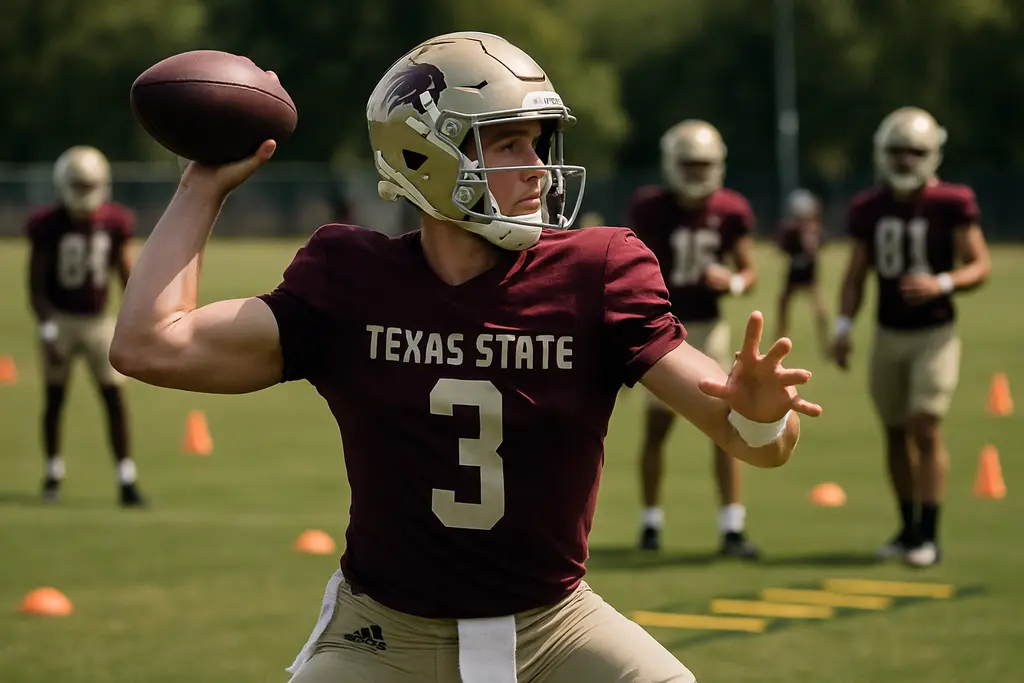
Quarterback remains the cleanest place to begin because Brad Jackson has given Texas State a clear statistical base. The redshirt sophomore had thrown for 1,439 yards with 14 touchdowns and five interceptions through six games, according to Third and Data’s Texas State roster. Those numbers show why the staff can build around him, but they also show why protecting the position matters. A six-game sample with 14 touchdown passes puts Jackson at the center of the offense’s identity.
Texas State roster Choices Behind Jackson
The backup picture is where the local conversation gets more interesting. Gavin Parkhurst, a redshirt freshman, had completed 8 of 9 passes for 114 yards and one touchdown in limited work. Shaker Reisig was also listed in the quarterback mix on the 2026 projected roster and depth chart from Punt & Rally’s Texas State depth chart. That does not mean the staff has an unsettled starter. It means the Bobcats have to keep more than one passer prepared if the Pac-12 portion turns into a test of physical depth.
Jackson’s role is tied to more than passing totals. If Texas State keeps him in favorable down-and-distance situations, the offense can use its receiver group without forcing low-percentage throws. If penalties or negative runs create longer third downs, the quarterback room becomes stressed. That is where Parkhurst’s short sample matters, even if it remains limited. A backup who has shown accuracy in brief action gives the staff a safer practice framework and a more realistic emergency plan.
Skill Positions Give The Bobcats Multiple Answers
The running back room has two clear names at the front, with senior Torrance Burgess Jr. and Jaylen Jenkins carrying the main workload in the research notes. Taji Atkins gives the group another change-of-pace option, while freshman Davian Jackson was being shifted from receiver to running back to help the room. That move is worth tracking because position changes are rarely just depth-chart housekeeping. They often reveal where coaches want more insurance before physical conference games.
Running Back Depth Has To Protect The Passing Game
Burgess and Jenkins give Texas State a practical split: one back can absorb heavier usage, while the other provides relief and matchup value. The important part is how that pair supports Jackson. A credible run game keeps edge rushers from selling out against the pass, and it helps the offensive line avoid long stretches of obvious passing downs. Atkins’ value comes from versatility. If he can handle third-down work, the Bobcats can avoid tipping personnel tendencies.
Davian Jackson’s transition also speaks to roster management. A freshman moving from receiver to running back is not automatically ready for every protection call, but it can help practice reps, scout-team looks and late-game depth. For a San Marcos program trying to sustain Pac-12 competition, those small roster decisions matter as much as headline starters.
Receiver And Tight End Rotations Stretch The Field
At receiver, Beau Sparks and Chris Dawn Jr. lead the group as the top pairing in the research notes. The third receiver role has included Zechariah Sample, Kylen Evans, Tucker Cusano and Jordan Martin as names to track. That competition matters because Pac-12 defensive staffs will not treat Sparks and Dawn as unknowns. The Bobcats need a third option who can punish bracket coverage, win underneath and stay reliable on third down.
Tight end is another position where depth can shape play-calling. Blake Smith is identified as the top tight end, with Ty Stamey, Jake Simpson and Arvis Battle Jr. giving the room several options. That group gives Texas State flexibility in heavier sets, red-zone packages and pass protection. If the Bobcats can use two-tight-end looks without becoming predictable, they can help tackles against edge pressure while still threatening the seam.
Defensive Depth Will Decide How Long Drives End
The defensive front has several names worth watching. DonTerry Russell is identified in the research as a key edge-rushing threat, while Jo’Laison Landry was recovering from injury with the expectation that he could contribute once healthy. Ta’Derius Collins, Mekhi Buchanan and Blake Isbell were also listed among defensive front names to monitor. The clear roster point is that Texas State cannot rely on one pass rusher to change games.
Pac-12 offenses can stress a defense in different ways. Some weeks require edge discipline against mobile quarterbacks. Other games demand interior strength to prevent four-yard runs from becoming the rhythm of the night. Russell’s pass-rush value is high because pressure without blitzing gives the secondary help. Landry’s status matters because another healthy edge or front player allows the staff to rotate without losing burst late in drives.
Linebacker Depth Connects Front And Secondary
Terrence Cooks II is the anchor name at linebacker in the research notes, while Javante Mackey and Jordan Sample arrived as Arkansas transfers. Cole Nilles also emerged during the offseason with strong athletic testing marks. That mix gives the linebacker room experience and developmental upside, but the job is not simple. Linebackers have to fit the run, carry tight ends and backs, and clean up when the front forces plays sideways.
For Texas State, the linebacker group may determine whether defensive stops become field-position wins. A good first-down tackle can force a Pac-12 offense into its call sheet earlier than planned. A missed fit can turn a modest gain into a drive-extending play. That is why Cooks’ role as the steady piece matters. Transfers and younger athletes can raise the ceiling, but the defense still needs a dependable communicator in the middle.
Secondary And Special Teams Carry Hidden Pressure
The cornerback room is described as tall and experienced in the research notes, with Trez Moore returning from injury and Dexter Ricks Jr., Craig Royal Jr., Chris Jones, Cordarian Powell and Skyler Lewis all in the rotation conversation. That kind of corner depth is valuable because Pac-12 opponents can force defenses into nickel and dime looks for long stretches. If Texas State trusts multiple corners, the staff can match personnel without overloading one side of the field.
Safety also brings flexibility. Ryan Nolan had the inside track at boundary safety, while Lawton’s shift from corner gave the group another movable piece. Chase Davis and Michael Patterson were also listed among the safety options. Position flexibility is not just a coaching phrase. A safety who can handle boundary work, coverage adjustments and run support helps disguise looks without substituting. That can be the difference between a quarterback getting a clean pre-snap read and having to confirm coverage after the snap.
Kicker Competition Could Shape Close Pac-12 Games
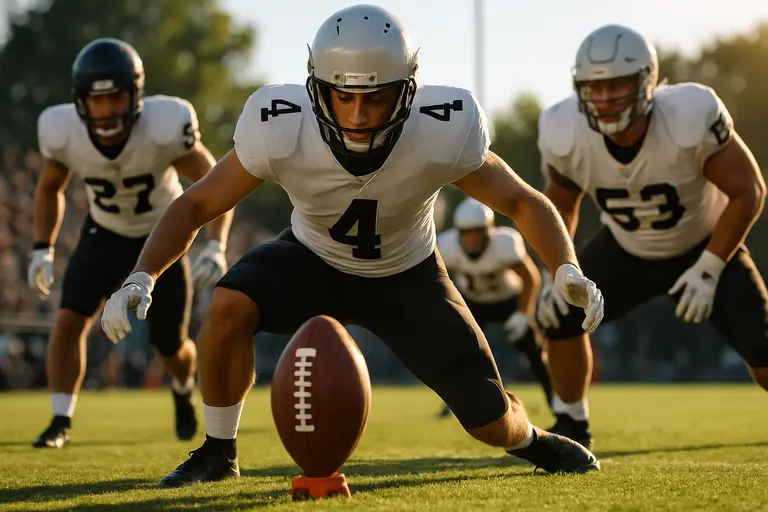
Special teams are the easiest area to overlook until a conference game tightens late. Thomas Flintoff was identified as the likely punter in the research notes. The place-kicker competition included Michael James, Dylan Cunanan and walk-on Jacob Bonilla for field goal duties. That is a meaningful roster battle because field position and finishing drives often decide games between teams with similar talent levels.
For local fans at UFCU Stadium, the kicking operation is not a side issue. Short fields change crowd energy. Made field goals reward long drives. A steady punter protects the defense when the offense stalls. Texas State does not need special teams to carry the roster, but the Bobcats need that phase to avoid giving away yards while the offense and defense adjust to Pac-12 weekly matchups.
Why Texas State roster Depth Matters In Pac-12 Play
The key roster read is that Texas State has enough front-line talent to be competitive, but the Pac-12 test is about repeatability. Jackson’s production gives the offense a strong base. Burgess, Jenkins, Sparks, Dawn and Smith give the skill group structure. Russell, Cooks and a long list of defensive backs give the defense identifiable pieces. The next step is turning names into dependable rotations.
That is why depth conversations should stay grounded. The Bobcats do not need every backup to become a breakout player. They need the second quarterback to protect the offense if called upon, the third receiver to win enough routes to punish coverage choices, the reserve defensive linemen to keep rush energy alive, and the specialist competition to settle into trustworthy execution.
For San Marcos, this is also a community story. The move into Pac-12 competition has raised attention around roster building, player retention and game-day expectations. Families, students and longtime Bobcat supporters are watching a program that has to prove its depth as much as its ambition. A related local read on Texas State roster depth framed the same issue through the first Pac-12 pressure points.
The best version of this team is not built on one star group carrying the rest. It is built on quarterback stability, balanced backfield usage, receiver competition, tight end flexibility, defensive rotation and reliable special teams. After six games in 2026, the roster question is clear: Texas State has pieces worth trusting, but the next Pac-12 matchups will show how many of those pieces can hold their roles when the margin gets smaller.