
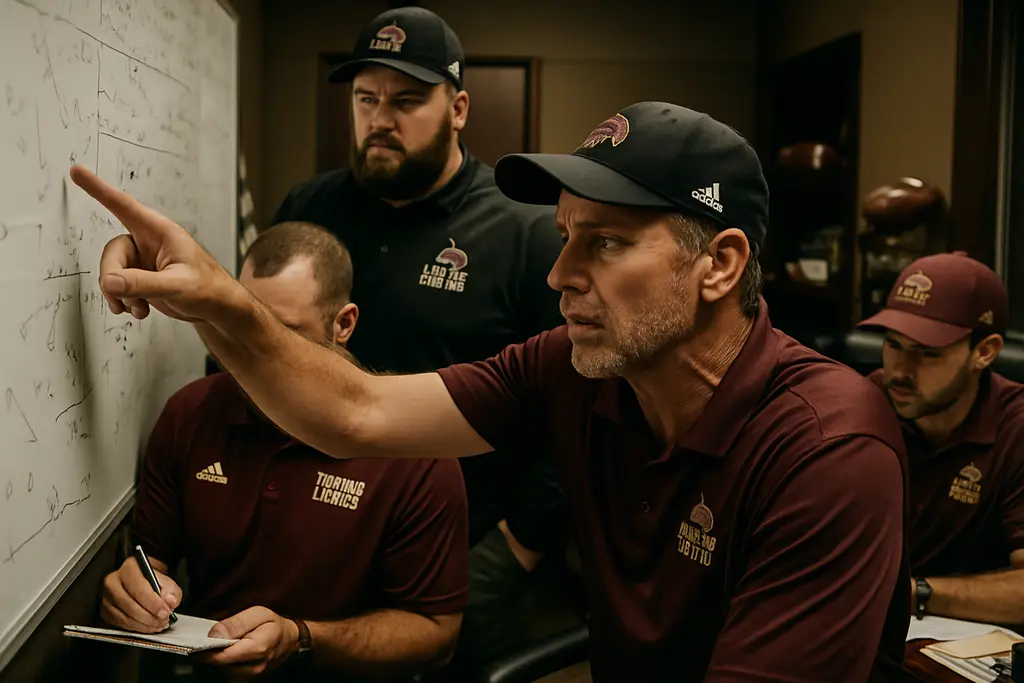

Texas State Depth Chart evaluation has taken on a different weight as the Bobcats entered their first Pac-12 football season. For San Marcos, this is not only a conference-label story. It is a roster construction story: how G.J. Kinne’s staff balanced returning offensive production, defensive staff changes and portal additions before the program stepped into a higher-profile weekly schedule.
The most useful read is not a simple list of starters. Texas State’s depth conversation is about where the staff created competition, where experience already existed and which position groups needed a wider rotation to hold up against Pac-12 opponents. The official updates available through Texas State and the Pac-12 point to two clear themes: the Bobcats trusted established offensive names, and they invested heavily in defensive structure.
Texas State Depth Chart Starts With Staff Changes
The first major move came on the defensive side. Texas State announced on January 21, 2026, that it hired Will Windham as defensive coordinator, Marcus Patton to lead the secondary and Chris Gistorb as defensive line coach, according to the school’s staff announcement. Those hires matter because depth charts are not built only through player movement. They are shaped by teaching emphasis, practice reps, communication standards and how position groups are evaluated after spring and preseason work.
Why Staff Fit Matters To The Rotation
A new coordinator and two new defensive position coaches can change how Texas State grades its second and third units. That is especially true when a program is trying to sort defensive line, edge and secondary roles before facing a new conference schedule. The staff changes did not name starters on their own, but they created the framework for how the defensive rotation would be assessed.
For local supporters, this is where the Texas State Depth Chart becomes more than a weekly handout. It reflects how quickly a new defensive staff can identify dependable players, build trust in backups and keep the front fresh. In a Pac-12 setting, those answers are part of the program’s identity as much as the first offensive series.
Portal Additions Pointed To Defensive Urgency
The research notes show Texas State added defensive line and edge pieces through the January 2–16, 2026 transfer portal window, including Phillip Bradford, Mekhi Buchanan, Chancellor Owens and Kaleb James. That concentration tells a simple roster story: the Bobcats wanted more bodies and more competition up front.
Chancellor Owens later appeared among Texas State’s names on the Pac-12 preseason recognition list, giving that portal movement a direct link to the league’s early view of potential impact players. Even without declaring a full two-deep from the outside, the pattern is clear. Texas State did not treat defensive line depth as a side project. It treated it as a priority position group for the Pac-12 move.
Quarterback And Skill Rooms Set The Offensive Floor
Texas State’s offensive outlook began with more continuity than many programs get during a conference move. Brad Jackson returned as the quarterback figure at the center of the roster discussion, and he was one of the Bobcats named on the 2026 Pac-12 Preseason Impact List released on August 4, 2026, alongside Beau Sparks, Jo’Laison Landry, Chancellor Owens and Chris Dawn Jr., according to the official Pac-12 preseason list.
Texas State Depth Chart At Quarterback
The quarterback room carried one of the clearest storylines in camp: Texas State had a returning starter at a position that often defines conference transition years. Research notes identify Brad Jackson as the returning starter, with Gavin Parkhurst and Boston College transfer Shaker Reisig part of the backup picture. That gives the staff a different type of planning base than a wide-open quarterback search would have provided.
For a team trying to establish itself in a new league, quarterback continuity helps the rest of the offense settle. It can sharpen receiver timing, reduce installation strain and give the offensive staff a steadier reference point while sorting the rest of the Texas State Depth Chart. The backup competition still matters, but the top of the room gave the Bobcats an anchor.
Receiver Competition Goes Beyond Two Proven Names
At receiver, the research notes identify Beau Sparks and Chris Dawn Jr. as established top targets, with Zechariah Sample, Kylen Evans, Tucker Cusano and freshman La’Keyleon Graves among the players connected to the next wave of snaps. That group matters because a first Pac-12 season is unlikely to be carried by two receivers alone.
Depth at receiver is about role clarity. One player may handle perimeter snaps. Another may fit in motion packages. A younger receiver may earn work on special teams before expanding on offense. That is why the third receiver discussion is important for San Marcos fans tracking weekly development. It shows how the staff can spread responsibility beyond its headline names.
The running back room followed the same theme. Research notes list Torrance Burgess Jr., Jaylen Jenkins, Davian Jackson and Taji Atkins among key contributors, with Greg Burrell also part of the conversation when healthy. That kind of room allows the offense to adjust to game flow without asking one back to carry every situation. For a broader frame on how the roster was being measured against the new league, our earlier Texas State roster depth analysis tracked why these position battles mattered beyond opening-week labels.
Defensive Front Additions Carry Pac-12 Weight
If the offense had recognizable leaders, the defense had the more urgent construction question. Texas State’s staff additions and portal movement both pointed toward the same need: enough front-line depth to handle a more demanding conference slate. That does not mean every newcomer was expected to start. It means the Bobcats wanted more options for early downs, pass-rush packages and late-game stamina.
Inside Depth Could Shape Down-To-Down Control
The research notes identify Chancellor Owens, J.P. Deeter, Phillip Bradford, Kaleb James and Tae Woody among the defensive tackle and defensive line names tied to the interior rotation. The value of that group is not only measured by sacks or individual highlights. Interior depth affects how linebackers fit runs, how often safeties are forced downhill and whether the defense can stay on schedule after first down.
For Texas State, this position group may be one of the clearest roster signals of Pac-12 readiness. If the Bobcats can rotate without a major drop-off, the defensive staff gets more freedom with pressure looks and coverage calls. If the second unit struggles, the strain shows up across the whole defense.
Edge Roles Add Another Layer
The edge group also carried important names in the research notes, including DonTerry Russell, Jo’Laison Landry, Ta’Derius Collins, Mekhi Buchanan, Blake Isbell and Javarius Bell. Landry’s presence on the Pac-12 preseason list gave Texas State another recognized defensive name, but the rotation behind and around that group remains central to how the Bobcats create pressure.
Edge depth is valuable because it connects pass rush and run defense. A defense that can keep fresh edge players on the field has a better chance to set the edge, chase quarterbacks and handle tempo. That is why the Texas State Depth Chart should be read as a rotation map, not just a starter list.
- Quarterback continuity gave the offense a stable starting point.
- Receiver competition created a meaningful battle behind the top targets.
- Defensive staff changes reset how the front and secondary were evaluated.
- Portal additions showed clear emphasis on defensive line depth.
What Texas State Depth Chart Means For San Marcos
The local significance is straightforward. San Marcos has watched Texas State build toward a larger football stage, and the first Pac-12 season placed more attention on roster management than simple preseason excitement. The names receiving league recognition mattered, but so did the quieter battles for backup snaps, special teams roles and rotational trust.
Texas State Depth Chart movement also affects the community feel around the program. Fans identify with returning players such as Brad Jackson, Beau Sparks and Chris Dawn Jr., while portal additions give supporters new names to learn. That blend is now part of modern college football, especially for a program trying to raise its week-to-week standard.
The clearest supported takeaway is that Texas State entered its Pac-12 transition with offensive continuity, defensive coaching changes and a clear push to strengthen the front. That combination does not guarantee results, and the available research does not support declaring final starters across every position. It does support a more grounded read: the Bobcats built their roster plan around experience where they had it and competition where they needed it most.
For a San Marcos program stepping into a bigger conference spotlight, that is the roster story to keep tracking. The two-deep will keep changing through performance, health and practice evaluation, but the foundation was visible before the first Pac-12 season took full shape.