
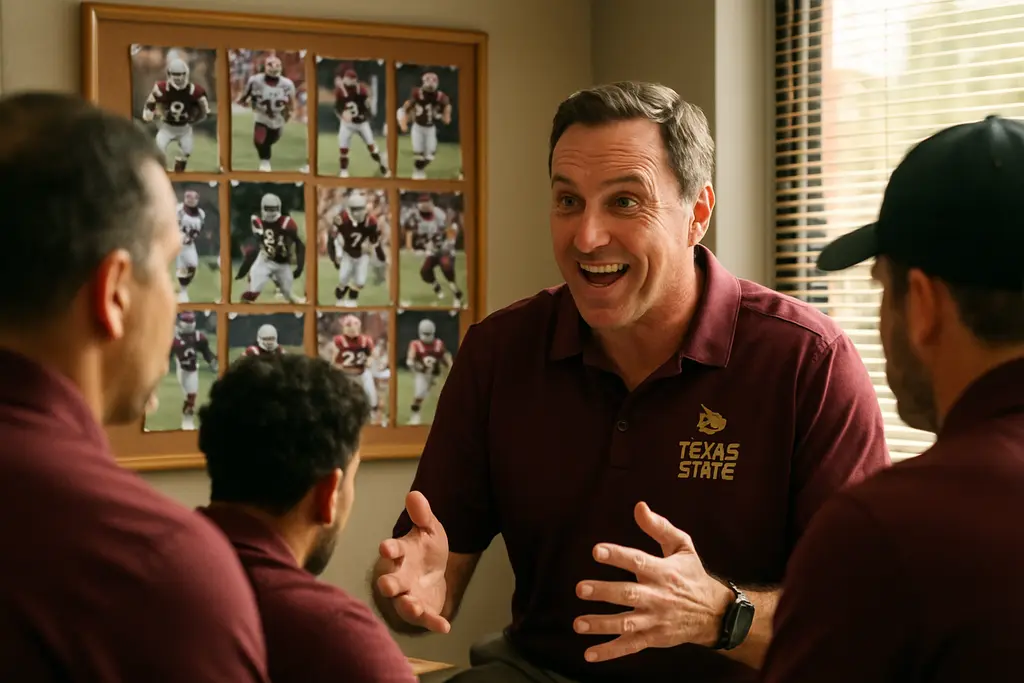

Texas State recruiting entered a different phase after the Bobcats became full Pac-12 members on July 1, 2026, a move that came with a $5 million Sun Belt exit fee approved by the university’s Board of Regents, according to the official university statement. The move is no longer a future pitch. It is now part of the daily recruiting conversation in San Marcos, where G.J. Kinne’s staff has to blend Texas high school relationships, transfer portal experience and a wider regional reach without losing the local identity that helped the program climb.
Texas State Recruiting Now Sells Pac-12 Status
The conference move changed the way prospects can view Texas State. For years, the Bobcats could sell playing time, Texas roots, a growing campus and a chance to help build something in San Marcos. Those pieces still matter. The difference is that the same pitch now sits inside a Pac-12 membership structure, which gives the staff a more direct answer when recruits ask about competition level and program direction.
Why Texas State Recruiting Changed After July 1
July 1, 2026, gave the staff a clean dividing line. Before that date, Texas State could talk about its accepted move and future conference path. After that date, the Bobcats could recruit as an active Pac-12 program. That matters in living rooms across Texas because prospects and families tend to look for proof, not slogans. A conference logo alone does not win a recruitment, but it helps frame the football conversation around opponents, exposure, travel and player development.
The early return for Texas State recruiting has been visible in the program’s reported signing profile. Research on the Bobcats’ recent classes showed that eight of the program’s 10 highest-rated recruits signed after the July 2025 announcement that Texas State had accepted its Pac-12 invitation. That does not prove every prospect chose the Bobcats because of realignment. It does show that the timing of the move lined up with a clear rise in recruiting outcomes.
La’Keyleon Graves Set A New Local Marker
The most recognizable name in the 2026 class is La’Keyleon Graves. On3 reported that Graves, a four-star athlete, committed to Texas State in the 2026 cycle through its Graves commitment coverage. Research also identifies him as the program’s first-ever four-star recruit per 247Sports, making his addition more than a single roster win.
Graves gives the Bobcats a recruiting reference point for future conversations. Texas State can now point to a top-rated high school athlete who chose San Marcos during the program’s Pac-12 shift. Entering the 2026 season, research notes that Graves had practiced at both wide receiver and defensive back. That two-way usage does not guarantee a fixed role, but it does show how the staff has evaluated him as a flexible athlete rather than locking him into one spot before he settles into college football.
Building The 2026 Class Around Texas
The 2026 high school class showed that Texas State did not use the Pac-12 move as a reason to abandon its home base. Research lists the class as 74th nationally, the best in school history, with 15 high school signees. Fourteen of those signees were in-state players. That is the clearest signal in the class: the Bobcats still see Texas as the foundation, even as the conference schedule now carries a western footprint.
Keeping In-State Talent Home
For San Marcos, that Texas-heavy approach matters. It keeps families closer to UFCU Stadium, strengthens ties with high school coaches and gives the fan base a roster it can recognize through familiar school districts and recruiting areas. The Bobcats are not trying to become a detached national operation. They are trying to raise their level while keeping the Texas pipeline central to the roster.
The class structure also fits the way Texas State has to grow. High school signees are not just depth pieces; they are the players who can carry the program’s culture into multiple seasons. If the Bobcats are going to be a steady Pac-12 member, they need developmental wins from in-state prospects who can mature physically, learn the system and stay connected to the program through the early years of the new conference era.
What Graves Changes In Evaluation
Graves’ arrival raises the standard for what the staff can credibly chase. A first four-star signee gives Texas State proof that it can stay in the conversation for higher-rated athletes. That does not mean the Bobcats will suddenly sign every top target in the state. It means the staff has a more convincing example when it tells prospects that San Marcos is not a fallback option.
There is also a roster-building lesson in his recruitment. The Bobcats valued athletic range. Practicing him at receiver and defensive back entering the 2026 season reflected a willingness to identify talent first and sort out the final position later. That kind of evaluation can be valuable for a program trying to close the gap between its current roster and the weekly demands of Pac-12 play.
Portal Additions Filled Immediate Pac-12 Needs
High school recruiting builds the spine of a program, but the portal gave Texas State a way to respond quickly to the increased physical demands tied to the conference move. Research shows the Bobcats added nearly 20 transfers in the 2026 portal class, including eight from Power Four programs. That is not a minor supplement. It is a major roster adjustment designed to help the program compete sooner.
Offensive Line Was A Clear Signal
The most telling portal detail is up front. Research notes that all three offensive line additions in the 2026 transfer class came from Power Four schools. For a team stepping into a tougher weekly schedule, that is a direct response to line-of-scrimmage pressure. Skill talent matters, but the Pac-12 move was always going to test whether Texas State could hold up physically against deeper defensive fronts and more experienced rotations.
That offensive line emphasis also helps explain why the portal class should be judged differently from a typical short-term fix. The Bobcats did not only add pass catchers, defensive backs or depth pieces. They invested in an area that affects quarterback comfort, run-game consistency and the ability to finish drives. In recruiting terms, that tells local prospects that the staff is not just chasing stars; it is trying to build a roster that can survive the weekly grind.
Two-Deep Pressure And Roster Balance
The scale of movement was significant. Research on roster tracking showed 28 incoming transfers and 18 outgoing transfers, with 32 of 55 projected two-deep depth-chart slots expected to be filled by transfers. Because those are projected depth-chart numbers, they should not be treated as a final official lineup. Still, they show how much competition the staff added across the roster.
For fans in San Marcos, that means the 2026 team has looked different from recent versions of the Bobcats. More transfer-heavy depth creates short-term upside, but it also puts pressure on coaches to connect players quickly. Practice habits, position-room leadership and special teams buy-in become central to making the roster fit together. For more on how this shift has affected the program’s broader build, our prior coverage of the Pac-12 recruiting push tracks the same roster theme from another angle.
The 2027 Board Shows A Wider Map
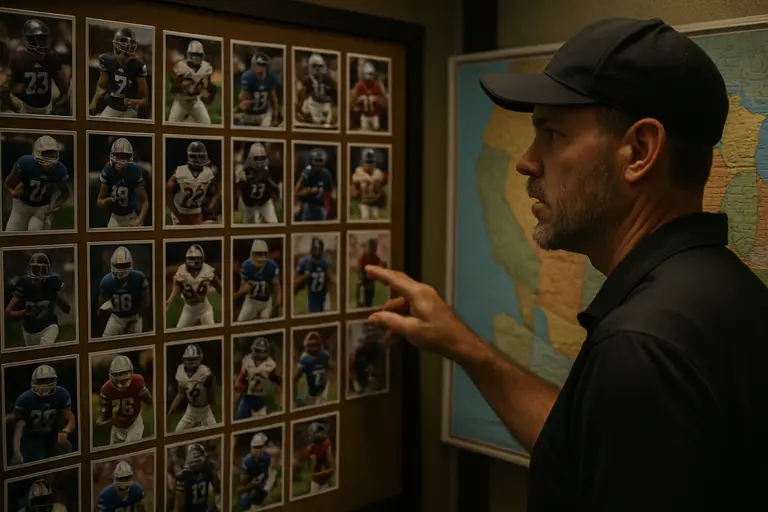
The 2027 cycle shows the next part of the strategy. In June 2026, before the July 1 effective date of full Pac-12 membership, research lists 16 commitments for the Bobcats’ 2027 class. That group included one four-star prospect, running back Daylon Gordon from Wylie, and 11 three-star prospects. By early July 2026, Texas State had 20 prep commits in the cycle.
June Commitments Put Numbers On The Board
Those numbers matter because they came while the program was moving from announcement phase to membership reality. The staff did not wait for a full season in the Pac-12 to build the next class. It pushed early, filled spots and gave the 2027 board structure before many fans had fully adjusted to the new conference label.
The out-of-state piece is just as notable. Research shows seven of the 20 early 2027 prep commits were from outside Texas, the most in the G.J. Kinne era. The states listed included Arkansas, Louisiana, Oklahoma and California. That does not mean Texas State has shifted away from Texas. It means the Bobcats are testing whether Pac-12 membership gives them more reach in nearby states and selected western markets.
Why Wider Recruiting Still Starts Locally
A wider map only works if the home base stays strong. Texas State’s best path is not to copy every national recruiting model. The Bobcats have a local advantage when they can bring prospects and families to San Marcos, show them the campus, introduce them to the football staff and connect them with a program that still feels close to home.
The staff’s challenge is balance. Texas recruits remain the core. Out-of-state prospects can raise competition at specific positions. Portal additions can fill immediate needs. Put together, those three lanes give Texas State more ways to build a Pac-12 roster than it had during its Sun Belt years. The risk is that constant roster movement can make development harder if the high school pipeline thins. So far, the 2026 and 2027 data points show the Bobcats trying to avoid that problem by signing Texas players while widening the board with care.
What Texas State Recruiting Means For San Marcos
The recruiting story is also a community story. More high-profile prospects bring more attention to San Marcos, but the value is not just national ranking movement. It is about whether local fans see a roster that feels connected to Central Texas while still strong enough to compete in the Pac-12. The 2026 class, with 14 in-state high school signees, gave the community that local tie. The portal class gave the roster more immediate experience. The early 2027 commitments suggest the staff is trying to keep momentum going past the first wave of realignment attention.
Texas State recruiting is no longer judged only by whether the Bobcats found overlooked players. It is now judged by whether they can keep Texas talent, win selected high-end battles, evaluate flexible athletes like Graves, and add transfers who raise the two-deep without blocking long-term development. That is a harder standard, but it is the standard that comes with Pac-12 membership.
As of September 24, 2026, the supported picture is clear: Texas State has used the conference move to raise its recruiting ceiling, but the strategy remains rooted in Texas. The Bobcats are not replacing their identity. They are testing how far that identity can travel now that San Marcos sits inside a new conference conversation.