
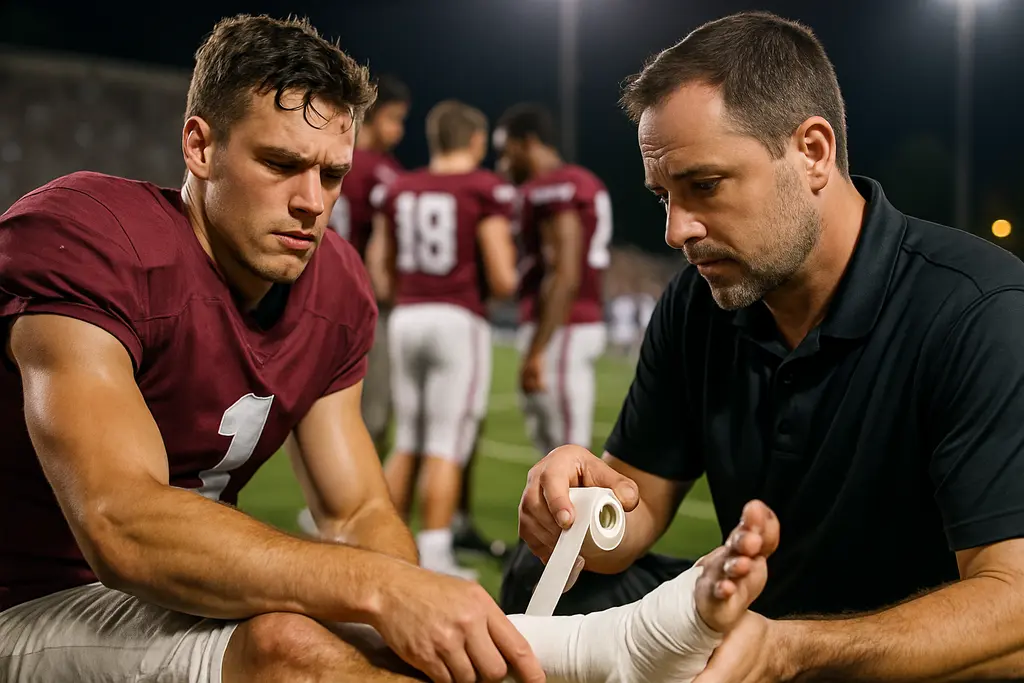

Texas State Injuries are now part of the central football question in San Marcos before Utah State visits UFCU Stadium on Saturday, October 24, 2026. The Bobcats enter the matchup at 3-3 and 1-1 in Pac-12 play, while Utah State is listed at 2-4 and 1-1 by Utah State athletics in its game-week release for the trip to Texas State Utah State game notes. With both teams even in conference record, the health of Texas State’s pass catchers, tight ends and running back rotation could influence how G.J. Kinne’s staff builds the plan for Saturday night.
How Texas State Injuries Change The Offensive Plan
The local angle is simple: Texas State is not just managing a game-week report. It is managing offensive identity during the program’s first Pac-12 football stretch. The Bobcats had a major response on October 15, 2026, when they defeated Colorado State 66-27 for their first Pac-12 win, according to the Texas State team profile and recent results listed by Punt & Rally Texas State team profile. That result showed the ceiling of the offense when the run game and spacing work together.
The concern before Utah State is whether the same spacing can be counted on if several skill-position players are unavailable or limited. Punt & Rally lists wide receivers Kylen Evans and Beau Sparks as questionable, tight end Blake Smith as out with a foot injury, tight end Cole Snodgrass as out with an undisclosed injury, and running back Davian Jackson as questionable. Those statuses matter because Texas State’s offense asks defenses to defend width, pace and formation stress. If the available group narrows, the play sheet can narrow with it.
Texas State Injuries At Receiver
Evans is listed as questionable with a shoulder issue, while Sparks is listed as questionable with an undisclosed issue by Punt & Rally. The same source frames Evans as a recurring game-time decision in recent weeks and notes that Sparks has played through injury in recent games. That leaves Texas State in a familiar but uncomfortable spot: the staff can prepare a plan, yet Saturday’s actual receiver rotation may not be settled until close to kickoff.
That uncertainty can affect quarterback rhythm as much as raw production. Brad Jackson’s reads depend on timing, leverage and trust. If Evans or Sparks is limited, the Bobcats may need cleaner work from Chris Dawn Jr. and other targets in the short and intermediate areas. The issue is not just replacing a name on the depth chart. It is replacing the route menu that player can handle, the defensive attention he draws and the comfort level the quarterback has with him on third down.
Why Tight End Depth Is Under Pressure
The tight end room carries a different type of strain. Smith is listed as out with a foot injury and has missed multiple games with no announced return timeline in the supplied research. Snodgrass is also listed as out with an undisclosed injury and has missed multiple consecutive games. That puts pressure on the remaining tight end options to handle more than one job.
In practical football terms, tight end injuries affect the run game, protection calls and passing structure. A healthy tight end group can help disguise whether Texas State is running inside zone, protecting the edge or slipping into a quick route. With fewer options, defenses may get cleaner pre-snap information. That is why tight end availability can show up in ways that do not always appear in the box score.
Receiver Availability Could Shape Brad Jackson’s Reads
Texas State does not have to abandon its personality if one or both questionable receivers are limited, but the offense may need to shift where the ball goes early in drives. The staff can use quick throws, motion and bunch formations to create easier releases for available receivers. It can also ask the quarterback to work through a more defined first read if the lineup is missing some of its usual route variety.
The risk is predictability. If Utah State can treat the tight end position as less of a receiving threat because Smith and Snodgrass are out, then safeties and linebackers can cheat more attention toward outside receivers and the run fit. That would make first down particularly important for Texas State. If the Bobcats stay ahead of the chains, they can keep Utah State guessing. If they live in obvious passing downs, receiver health becomes a larger issue.
The Texas State Injuries conversation also has a player-development side. Younger receivers and reserve tight ends do not need to become full-time stars in one night. They need to win assignment-by-assignment. One clean block on a perimeter run, one route run at the right depth, one secured catch on second-and-medium can keep the offense balanced. That is how depth turns from a roster talking point into real game value.
Running Back Depth Matters After The Colorado State Breakout
Davian Jackson’s questionable status adds another layer to the offensive plan. Punt & Rally lists him with an undisclosed injury. The supplied research also notes that Torrance Burgess Jr. led the ground game in the 66-27 win over Colorado State on October 15, 2026. If Jackson is limited or unavailable on October 24, Burgess may again be asked to carry a larger workload, while younger or reserve backs may need to fill situational snaps.
Carry Distribution Is More Than Volume
Running back depth is not only about who gets the most carries. It is about pass protection, short-yardage trust, ball security and keeping tempo from stalling. If the Bobcats want to play fast, they need backs who can stay aligned, process the call and handle pressure looks without the offense slowing down.
Against Utah State, that could influence how Texas State opens the game. A healthy rotation allows the Bobcats to test the Aggies with tempo and fresh legs. A shortened rotation may lead to more selective pacing and more designed touches for the players the staff trusts most. The difference may be subtle from the stands, but it matters on the headset.
How The Tight End Situation Connects To The Run Game
The injuries at tight end and running back should not be viewed separately. If Texas State is thin at tight end, the offense may use more receiver-heavy personnel. That can create space, but it can also change the math in the run game. If Jackson is also limited, the Bobcats may need to balance explosive intent with workload management for Burgess and the rest of the backfield.
This is where coaching adjustment matters. Texas State can use motion to identify coverage, create angles and help the offensive line without leaning on heavier formations. The staff can also use the passing game as an extension of the run game through quick throws to the perimeter. Those choices would be less about style points and more about keeping the offense on schedule with the available personnel.
San Marcos Stakes For A Pac-12 Home Date
For San Marcos, this matchup is not just another home game. Texas State is hosting Utah State during a new conference era, and the game falls into a campus-week rhythm that has already carried local planning value. For readers tracking parking, timing and community activity around the stadium, our Utah State homecoming guide covers the game-day side of the October 24 date.
On the field, the stakes are tied to conference positioning and roster resilience. Both teams are listed at 1-1 in Pac-12 play entering the matchup. Texas State already showed it can produce a high-output performance in the Colorado State win, but one strong result does not remove the need for weekly answers. The next test is whether the Bobcats can keep their structure intact while managing availability questions across multiple skill groups.
That is why depth charts matter in this spot. The public often focuses on starters, but October football usually rewards the teams that can survive the second and third layers of the roster. If the receiver room is not at full strength, the next options must handle expanded snaps. If two tight ends remain out, the staff needs alternative answers in formation and protection. If the running back rotation is thin, the offense must be careful with workload without becoming passive.
Why Texas State Injuries Matter Against Utah State
The most honest read is that Texas State’s availability picture remains uncertain as of October 20, 2026. The reported statuses give us useful direction, but they do not provide final snap counts or game-day decisions. Evans, Sparks and Davian Jackson being questionable means the Bobcats could still receive help from them. Smith and Snodgrass being listed out puts firmer strain on the tight end room.
For Texas State, the path against Utah State starts with avoiding self-inflicted limits. Clean first downs, steady protection and efficient early throws can keep the offense from depending on injured or limited players to solve difficult downs. The defense and special teams will have their own jobs, but the offensive health question sits at the center because so many of the listed issues are clustered around players who shape spacing and personnel groupings.
The Texas State Injuries picture does not remove the Bobcats’ chance to control the game in San Marcos. It does make the margin for sloppy execution thinner. If the available receivers create separation, if the tight end replacements hold up in blocking and if the running back rotation stays functional, Texas State can carry lessons from the Colorado State win into another important Pac-12 home date. If those areas wobble, Utah State will have clearer targets for pressure and coverage decisions on October 24.